










Curry Barker’s “Obsession” isn’t the first film to take a common idiom to the extreme, but its horror twist on the age-old phrase “be careful what you wish for” provides a remarkably entertaining and coherent storyline with profoundly relatable themes, particularly for Gen Z audiences. The film, which released in theaters on May 15, has already broken numerous records and far exceeded its anticipated box office performance, quickly cementing its place in cinema history as one of the most successful indie films of all time.
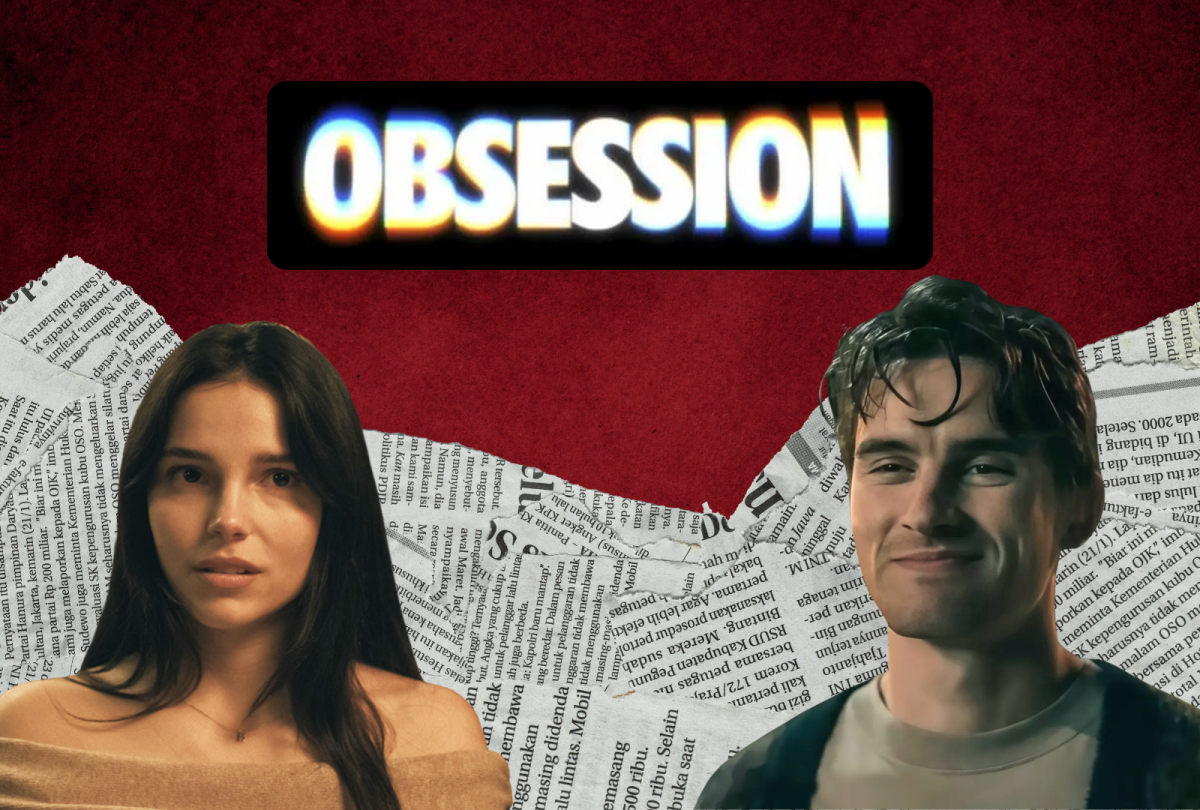
“Obsession” follows Bear (Michael Johnston) — a stereotypical “nice guy” and the film’s notably timid protagonist — as he becomes infatuated with his seemingly flawless friend and co-worker Nikki (Inde Navarrette). After failing to confess his true feelings for her, Bear uses a supernatural trinket to make an unfortunate wish that causes Nikki to become hopelessly obsessed with him. As the film progresses, Nikki’s obsession with Bear causes her to become increasingly manic and deranged, erratically switching between unsettlingly sweet and psychotic personas. Eventually, Bear’s wish results in unintended consequences for himself and Nikki, as well as the other two members of their tight-knit friend group, Sarah (Megan Lawless) and Ian (Cooper Tomlinson).
Despite following a historic year for horror with the unprecedented success of Ryan Coogler’s “Sinners,” “Obsession” holds its own as a uniquely memorable rendition of the horror genre. Many modern horror films have fallen victim to using excessive gore or jump scares as their “horror” element, but “Obsession” admirably manages to keep viewers just as terrified with its unnerving psychological elements and perpetually anxiety-inducing atmosphere. Although it has comparatively fewer gory or outright scary scenes than most other recent horror films, every grisly shock feels immensely purposeful in its timing and intensity. Even when Nikki isn’t necessarily on screen or in the scene, viewers are chronically on edge because of the constant threat that — due to Barker’s highly intentional and meticulous directing — feels lucidly real. The movie’s score, composed by Rock Burwell, plays an equally important role in contributing to the tense atmosphere by combining warm, nostalgic synth tones that convey deceptively romantic themes with distorted undertones that produce an eerie sense of uncanniness.
The unmistakable highlight of the film, however, is Inde Navarrette’s arguably Oscar-worthy performance as Nikki, which displays her versatility as an actress through her chilling, split-second shifts between Nikki’s distinct personalities. Her proficiency in viscerally expressing the duality of her character through her nuanced physicality and vocal delivery prompts audiences to empathize with her struggle for control, while simultaneously remaining paralyzed in fear of her unhinged, violent and psychotic breaks. Similarly deserving recognition is Michael Johnston’s strikingly authentic portrayal of Bear’s development from the desperately lonely and awkward “nice guy” that viewers sympathize with to the selfish and possessive manipulator that consciously refuses to restore Nikki’s autonomy.
Ultimately, the film serves as a disturbing allegory for the dangers of loneliness and the toxicity of limerence and codependency. Barker openly utilizes the film as a diagnosis and hyperbolic criticism of the modern dating scene and its many pitfalls, from violations of consent, to the lack of healthy communication, to the suspension of individual agency in mutually clingy relationships. “Obsession” aims to dispel the fantasy that absolute reciprocation of love, particularly in forced intimacy, represents some sort of ideal romance — and quite frankly, it succeeds. It is Barker’s satirical dissection of these modern relationship archetypes that makes “Obsession” so accessible to Gen Z audiences, which indisputably contributed to its immediate establishment as a box-office sensation.
The film has become the first to achieve three consecutive weekends of increasing box office revenue since Steven Spielberg’s “E.T. the Extra-Terrestrial” in 1982. With its exceedingly low budget at only $750,000, “Obsession” is projected to become one of the most lucrative indie films in cinema history, grossing nearly $150 million worldwide by its third weekend in theaters. Its success is even more shocking due to the concurrent release of several blockbusters like “Star Wars: The Mandalorian and Grogu,” “Michael,” and “The Devil Wears Prada 2.” Furthermore, with the release of the similarly thriving “Backrooms” movie directed by Kane Parsons — a young YouTube director similar to the 26-year-old Barker — Hollywood is undergoing a monumental shift away from the traditional studio system and toward low-budget indie films.
Overall, “Obsession” offers a polished and commendably straightforward plot that is enhanced by complex themes and morally ambiguous characters. The film thoroughly fulfills its duty as a horror movie, instilling audiences with a unique sense of dread through Navarrette’s unforgettable performance as the absurdly creepy and volatile Nikki. “Obsession” curiously intertwines aspects of romance, comedy, and horror in ways such that — if viewing an isolated section of the film — the audience might think that it belongs to a different genre; despite this, the film never feels confused in its identity, with every scene and piece of dialogue coming across as a perceptive and deliberate decision on Barker’s part. Rather than overexplain with drawn-out exposition and background lore, Barker appropriately leaves much of the film up for interpretation, prompting even more online discussion over various fan theories. With its revolutionary impact on the horror genre, indie film culture, and Hollywood industry, “Obsession” is undeniably one of the best horror films of the decade, delivering a refreshing cinema masterpiece that will leave a lasting impression on the horror community.