
NJ Commissioner of Education Dr. Lily Laux visits Cherry Hill Public Schools amid budget crisis


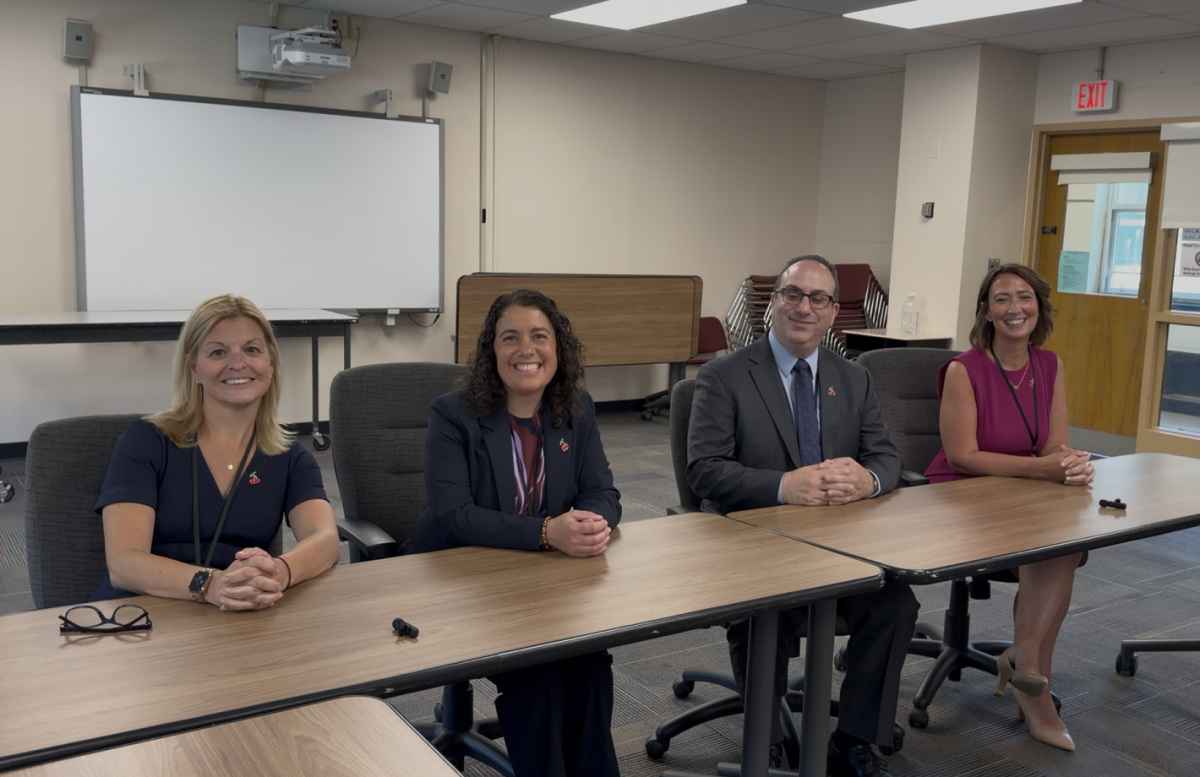
What’s the situation with the Cherry Hill Public Schools’ state aid?
The Cherry Hill Public Schools community was notified of a $29 million budget gap for the 2026-27 school year by Superintendent Dr. Kwame Morton and Board of Education President Gina Winters on March 12. The budget gap resulted from a nearly $860,000 state aid reduction compounded by rising costs of transportation, employee health benefits, salaries, and investments in students. To put it succinctly, the district is going to be spending more money in the next school year while simultaneously receiving less state funding, which will only exacerbate the existing budget deficit.
“Every year, we find out what our funding is, and every year, we have a deficit,” Board of Education Vice President Adam Greenbaum said in an interview with Eastside. “We have to figure out how to balance things, how to keep the cuts as far away from the students as possible, how to maintain our facilities, and how to balance the budget.”
In the last three years, the district has lost over $8.6 million in state aid. Although state aid for education in New Jersey is increasing overall by $372 million, Cherry Hill Public Schools happens to be part of the 29% of districts statewide that are still slated to see a decrease in state aid. This reduction in state aid matches similar drops in the Eastern Camden County Regional and Medford Lakes school districts of about 3%, the most extreme in the state.
How is the district combating the budget gap and what is being affected?
Since the reduction in state aid was announced by the New Jersey Department of Education, the Board of Education has convened three times on March 19, March 24, and April 28 to discuss the budget for the 2026-27 school year. The Board utilized a zero-based budgeting approach to determine the budget, meaning that the budget was constructed entirely from scratch rather than drawing inspiration from previous years.
To combat the widening budget gap, the Board voted on March 24 to increase the portion of property tax taken by the school district by 7.4% — the maximum amount — in order to generate approximately $14.8 million. Additionally, approximately $8 million in non-personnel reductions were identified, including budget cuts to instructional supplies, professional development, technology, building maintenance, curriculum, equipment and subscription services. Despite this, the district is still left with a remaining $6.5 million gap that is projected to reduce 70 personnel positions across the district, including teachers, educational assistants and administrators.
“The consequences of these cuts are so much higher than the dollar amounts,” Winters said in a Board of Education testimony at the Assembly Budget Committee. “It threatens to decimate the progress we’ve made in recovering from pandemic learning loss and forever change the quality and character of public education in our district.”
What is causing the budget gap?
Aside from the drop in state aid, the other main issue exacerbating the budget gap is the rising costs of district-wide, nonnegotiable factors. For example, transportation costs have increased $1.3 million, yet the district has lost over $1 million in transportation aid, and because approximately 70% of Cherry Hill students rely on school transportation daily, its budget allocation is nonnegotiable.
Similarly, salary increases have added approximately $5 million in costs, and employee health benefit costs — a virtually uncontrollable expense for the district — have increased by $10 million due to nationwide shifts in health insurance market conditions. Furthermore, with more than 25% of students requiring special education services, the district is also being forced to increase budget allocation to special education in order to counteract the $4.3 million loss in special education aid.
Where do Cherry Hill Public Schools’ funds come from?
The general fund is what supports Cherry Hill Public Schools’ daily operations, including instruction, transportation, facility operations, administration, and support. Local, state, and federal revenue make up 87.2%, 12.8%, and 0.1% of the General Fund, respectively. The local revenue that makes up the majority of the district’s funds comes from school taxes and fees within the district. The state revenue provides formula-based state aid along with targeted support for special education, transportation, and school security. The federal revenue solely consists of Medicaid reimbursements for certain special education students.
Ultimately, it is the state revenue that has produced the most significant issues for the budget gap in recent years, which have largely been attributed to the School Funding Reform Act formula that determines state aid for districts depending on estimated education costs and the community’s economic status. The formula, which was enacted nearly 20 years ago, has long been considered outdated and inaccurate by districts across the state that consist of large, suburban, and economically diverse communities like Cherry Hill. For example, Cherry Hill Public Schools is still considered overfunded according to the formula’s calculations, despite evidence of underfunding and the fact that the district is the largest in South Jersey and the 11th largest in the state.
“The administration has abdicated its responsibility, hiding behind a formula that no longer works,” Winters said in a Board of Education testimony at the Assembly Budget Committee. “Please commit to fixing the funding formula to ensure the state is meeting its constitutionally mandated obligation for all districts.”
What areas will be unaffected?
The two most significant student areas that will be unaffected from a budget standpoint are the special education and preschool programs. The district will even be increasing the special education program’s budget by approximately $640,000 to meet persistently increasing needs. Similarly, the budget for Cherry Hill’s preschool programs will be increasing by approximately $3.1 million to support the expanding programs.
In terms of infrastructure, the district’s fund for projects within the capital reserve — which is used to fund critical facility maintenance outside of the bond referendum — will increase by about $182,000. The $3.1 million investment in capital projects can not be deferred to other budgets and will fund projects similar to the replacement of Cherry Hill High School West’s turf field and resurfacing of its track.
What can community members do to help?
Morton has encouraged members to stay involved and updated, even providing a Budget Clarity Hub with simplified and accessible information about Cherry Hill Public Schools’ 2026-27 budget. Morton and the Board have also persistently encouraged community members to reach out to local legislators and leaders at the New Jersey Department of Education to advocate for increased state aid.
“We have to show up for what we believe,” Morton said in an interview with Eastside. “Lend your voices to the conversation and make sure that our local legislators … our state government officials … [and] our commissioner of education understands what we value as a community.”
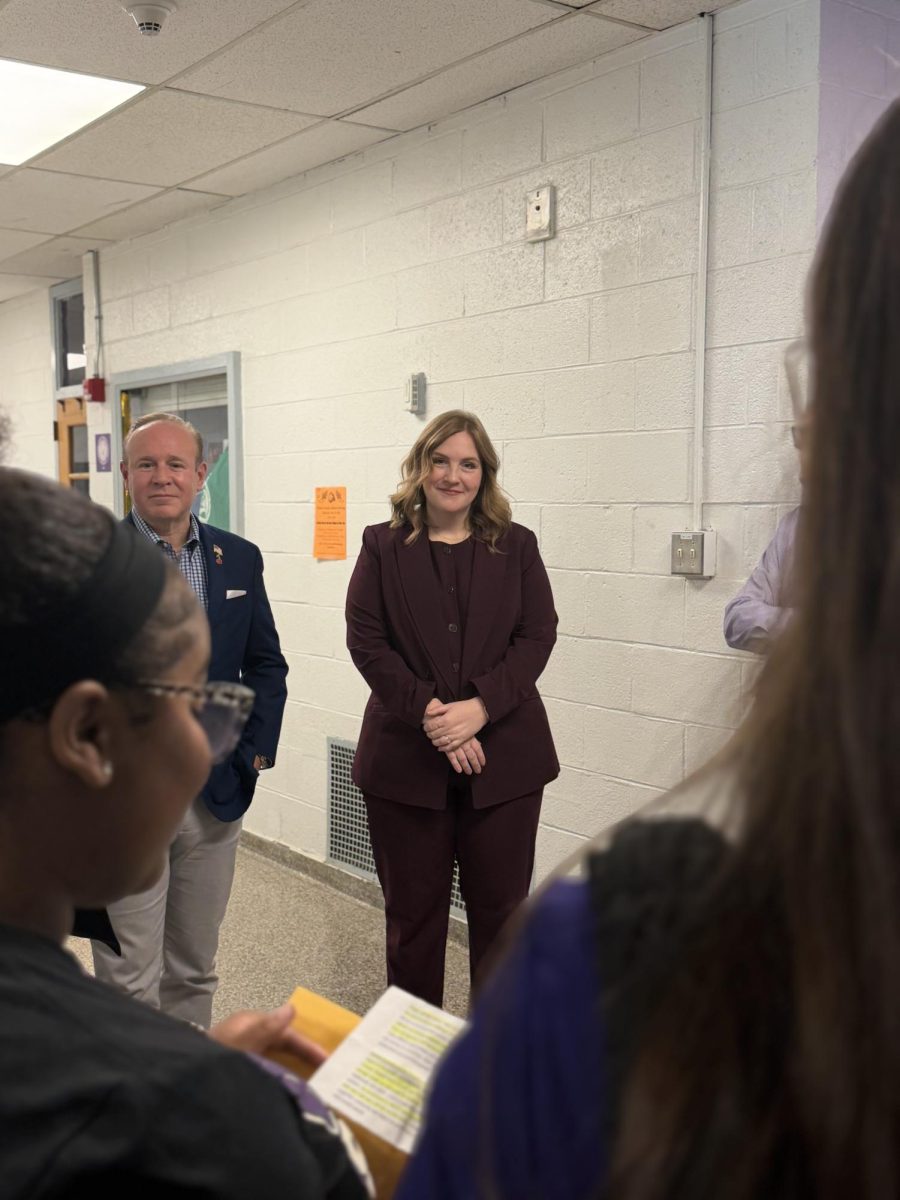
New Jersey Commissioner of Education Dr. Lily Laux visited three schools in the Cherry Hill Public Schools district on May 29, which Cherry Hill administrators organized to demonstrate the importance of restoring district funding. Among those in attendance were State Senator James Beach, Superintendent Dr. Kwame Morton and Mayor Dave Fleisher, along with several Board of Education members and central administrators. The tour began at John A. Carusi Middle School, where Dr. Morton introduced the attendees and explained the purpose of the visit.
For three consecutive years, the Cherry Hill Public Schools district has received reductions in state aid, resulting in a $29 million budget deficit for the 2026-27 school year. Although efforts to minimize the impacts of the budget cuts saved millions, funding remains insufficient to support the needs of students and staff. The in-person meeting with Laux provided an opportunity to showcase the programs and opportunities offered at various Cherry Hill schools.
“We’re hoping to show all the different ways that our students are thriving,” said Board of Education President Gina Winters during the opening remarks. “It’s a story of where we came from, where we are right now, and where we hope to go in the future, and that future depends on adequate funding.”
At Carusi, Laux heard firsthand from students about their experiences participating in and learning from the school community. She also visited the media center, special education classrooms, D-wing, and B-wing, which is currently under construction.
“Our community and parents have really been supportive. They get to see the fruits of this, and they’re loving it,” said Carusi Principal Mrs. Christina Franco regarding the multi-year renovations.
After leaving Carusi, the group took a bus to Joyce Kilmer Elementary School, where they visited the playground and preschool wing. There, Assistant Superintendent Dr. Farrah Mahan introduced Cherry Hill’s preschool expansion program, which will add 16 classrooms across various sites, along with facility improvements such as new playground structures. Laux toured eight of the newly-built classrooms and interacted with preschool students.
At Kilmer, Eastside had the chance to ask Laux her thoughts on the current funding formula and district budget. Presently, state aid is calculated using the School Funding Reform Act, which considers factors such as the cost of education and community wealth. However, recent demographic shifts mean that traditional notions of Cherry Hill being an affluent community no longer hold true. Nearly 25% of Cherry Hill students are economically disadvantaged, and 60% of them attend the district’s Title 1 schools.
“The current funding formula is designed to follow student need. It was a groundbreaking formula when it came into being over 20 years ago,” Laux said. “Now we’re hearing that across the state, it’s no longer working for many districts. So we’re getting ready to look at all of the components that go into it.”
In regard to the likelihood of changing the formula in the coming years, Laux expressed optimism.
“I hope [for that] to be very likely, but making sure that the formula supports all of the students in New Jersey is the goal. I think there’s a lot of energy and recognition that that’s a problem to collectively solve,” Laux said.
When asked if she had an idea of whether or not Cherry Hill specifically would receive more funding, Laux explained that there was no clear-cut answer.
“The short answer to that is not yet. As we talk about the funding formula, we have to make sure it works for every district in New Jersey, and there’s a lot of individual nuances,” Laux said. “But [it’s] really wonderful to see the programs and investments that our community here has already made.”
The last stop of the tour was Cherry Hill High School West, where Laux heard speeches from West students who spoke on their involvement in West’s athletic, student leadership, and internship programs. Laux’s tour ended with her visiting A-wing, D-wing, the library, and the functional vocational program. Following her departure, Morton and the attending Board members expressed optimism about the impression that the district made on the commissioner.
“I thought that she was very authentic and sincere in terms of her desire to learn as much as she can about Cherry Hill Public Schools. There are families, kids, hope, and dreams behind every strand of data, so that’s what we wanted to elevate today,” Morton said at the tour’s conclusion. “I think she walked away understanding the Cherry Hill story.”