
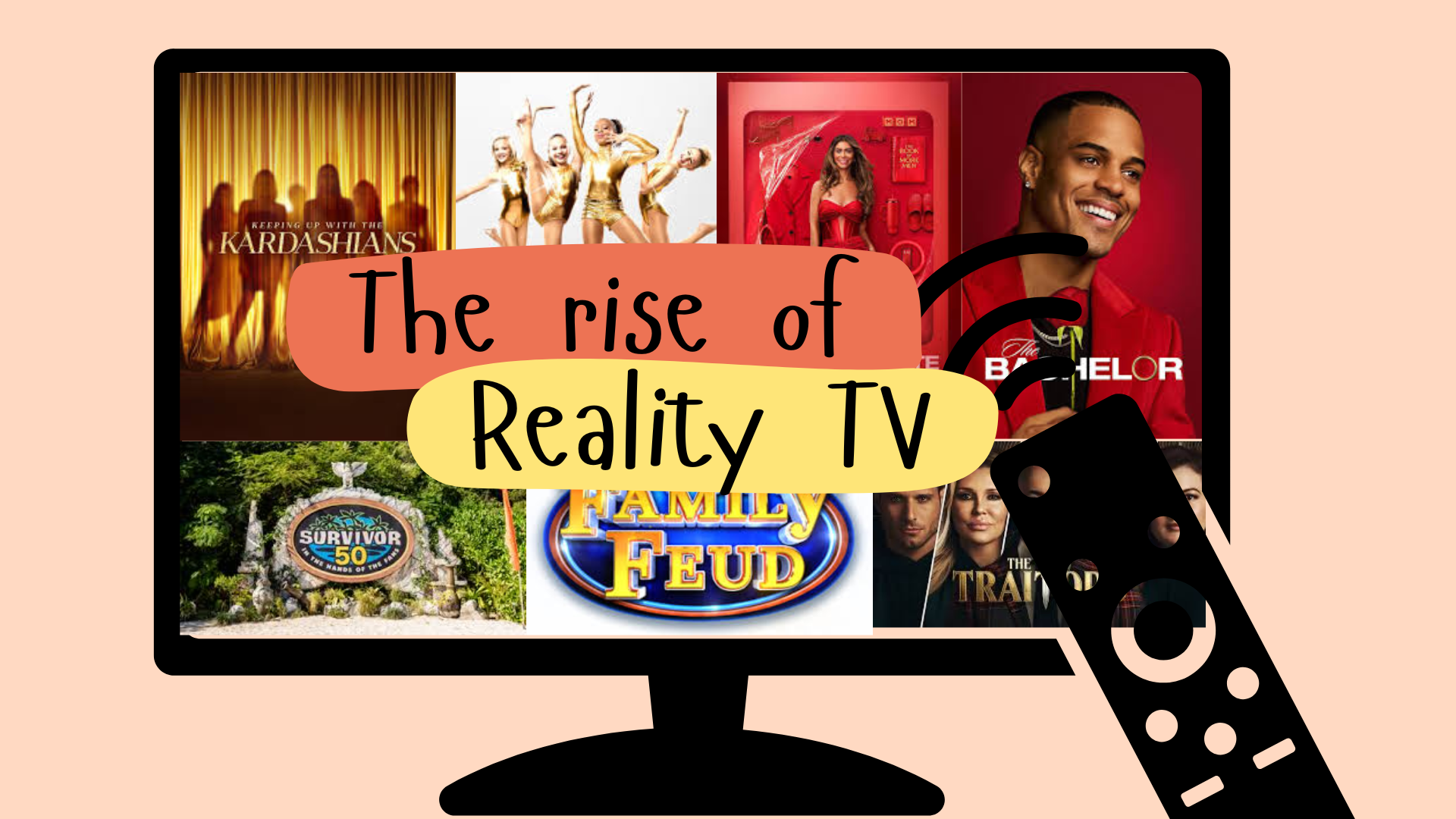
The power and problems of reality TV


It’s estimated that nearly 80 percent of adult viewers watch reality TV shows. Tracing back to “Candid Microphone,” which debuted in 1948 on ABC, unscripted drama has gained extreme levels of popularity.
Originally a radio show, “Candid Microphone” was renamed as “Candid Camera” in 1949 and premiered on NBC. It recorded people on a hidden camera as they reacted to pranks and stunts devised by Allen Funt, the show’s creator and original host. The show ended with a reveal of the hidden camera and with Funt saying, “Smile! You’re on ‘Candid Camera.’”
While “Candid Camera” is technically considered the first reality show, “An American Family” is the first of its kind to follow a group of people and their everyday lives. This show is known as the precursor to today’s “Real Housewives” franchise, “The Kardashians,” and other drama-packed shows. “An American Family” aired in 1973 on PBS, and it followed the Louds, a family from Santa Barbara, California, for seven months.
The 2000s was a turning point for reality television, with shows like “Survivor” and “Big Brother” ushering in a new style of competitive reality programming. This period also saw the rise of talent competitions—the most popular being “American Idol,” which influenced a variety of shows globally.
Today, reality television has shifted to focus more on giving insight into people’s personal lives, sensationalizing the drama and introducing a new level of intimacy and relatability. Reality TV has expanded to dominate the entertainment industry, with new subgenres emerging such as documentary, lifestyle, travel, self-improvement, and dating.
Since the dawn of TV broadcasting, reality television has been a staple of programming across American screens. However, the popularity of reality TV has been on a harsh decline in the last few years. Viewership of classic reality shows have plummeted, and the annual number of unscripted or reality series season premiers have been reduced by a third since 2022.
Despite the genre’s diminishing popularity, it still manages to captivate loyal viewers worldwide. From “Survivor” to “Love Island,” reality TV is kept alive by steadfast fans who can’t get enough of the format. So, what about reality TV continues to enthrall these audiences, even in the midst of its decline?
For one, reality TV provides an escape from everyday life for viewers. By watching conflicts of others, audiences are able to experience brief release from their own circumstances. Furthermore, the heavily dramatised challenges faced by the stars in reality shows often result in explosive arguments or even physical altercations. These volatile situations give viewers the opportunity to compare their own issues with the ones they see on TV. If the famous stars on their shows are having horrible conflicts, the viewers’ own problems might not seem as bad.
In addition to personal comparison with the struggles of the reality stars, audiences find themselves mesmerized by reality TV because of its shocking nature. Humans are inherently drawn to extreme conflict. Reality TV can be likened to a car crash in the sense that viewers can’t seem to look away from it—even though it might be distressing or cringeworthy. It is hypnotic.
Viewers may also watch reality TV to study social situations. While watching unscripted shows, audiences observe and interpret individual behavior and social dynamics in unorthodox situations. “Dating Naked” is a show where—as the name suggests—contestants must navigate through dates with various partners while being completely naked. It presents challenges that are not typically faced by the average viewer. The series interests viewers by functioning as a psychological study of how social structures work in strange scenarios.
Reality dating shows come with their own set of draws for audiences. People are fascinated by the pursuit of love and romantic developments. The allure of watching people navigate relationships is central to shows like “The Bachelor” and “90 Day Fiance.” Throughout reality dating shows, viewers build attachments to particular contestants, grabbing their attention whenever a star they like or dislike appears on screen. Furthermore, producers sometimes set someone up to be the “villain” of the series, who serves to create drama and disrupt the relationships being formed by other contestants. People are captivated by watching duplicitous people operate in social situations and eventually get punished for their actions. The basic structure of reality dating shows gives them timeless, widespread appeal.
“Dirty commentary” is a term used by critics to describe a genre that exploits everyday people for mass entertainment. For years, this term has been used to describe reality TV, which has been dismissed by critics as low-quality entertainment built on superficial drama. However, numerous fans and media commentators defend the genre as an important part of modern culture, arguing that reality TV offers something traditional scripted shows cannot: authenticity and reliability
Content creator and author Eli Rallo is among those defending reality TV online, describing it as a culturally significant form of entertainment rather than simply “mindless television.” Known as “Gen Z’s Carrie Bradshaw,” Rallo recalls that many of her own life milestones can be described as “reality TV-adjacent,” conveying that not all moments in reality TV are fabricated. Supporters of the genre say that reality programs can reflect real human behavior, which can further expand into conversations about relationships, social dynamics, beauty standards, and modern lifestyles
Unlike scripted television shows, reality TV places ordinary people into unpredictable situations. Fans argue that this unpredictability makes the genre feel more genuine. While traditional TV shows rely on carefully curated scripts, reality TV often captures raw emotions, reactions, conflicts, and awkward moments that audiences find relatable.
Psychologists have acknowledged that people watch reality TV for escapism. Watching reality TV can serve as a “mini-vacation” from daily stress, or in other words, provide a guilt-free way to mentally disconnect from personal problems. Moreover, the idea of escapism collides with Schadenfreude, which is an experience of pleasure or joy that comes from learning of the troubles and failures of another person. Not only are people able to escape their own issues, but they are also able to witness other people struggling with their own problems through reality TV.
In contrast to judging others for their failures, people watch reality TV to live vicariously through a contestant. Viewers can experience adventures, romances, or luxurious lifestyles through contestants and celebrities on screen. Fans of “Survivor”, for example, can enjoy the suspense of surviving in the wilderness without facing the actual physical hardships of hunger, exhaustion, or dangerous weather conditions themselves.
Media analysts also note that reality TV encourages audience participation in ways traditionally television may not. Viewers are able to debate about eliminations, relationships, and contestant behavior online, turning episodes into shared cultural events among the public. The idea of joining in an online discourse further encourages people to watch reality TV, giving people the ability to listen to others who share the same views.
Critics still argue that reality shows exaggerate conflict for entertainment value. However, defenders believe the genre’s emotional immediacy and connection to everyday life explain why reality television continues to attract millions of viewers worldwide.