
The double-edged sword to social media: a look into Snapchat


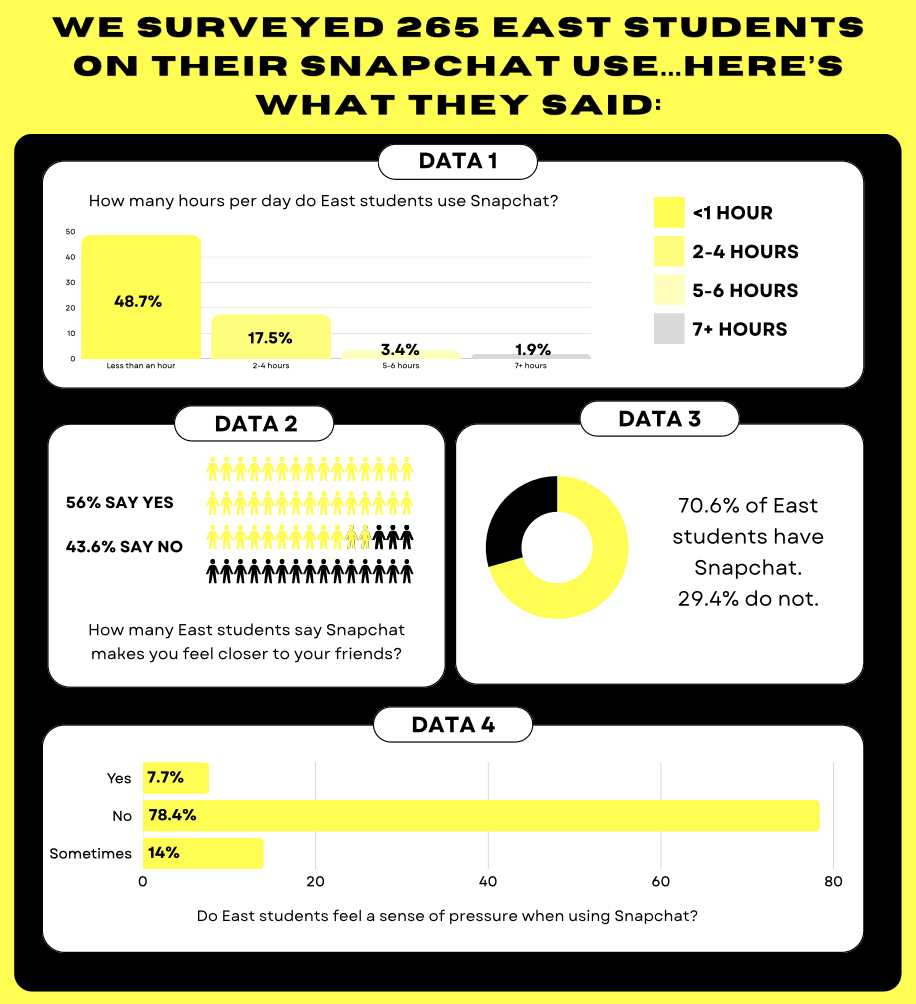
Three Stanford students, Evan Spiegel, Bobby Murphy, and Reggie Brown, created Snapchat in 2011. Their goal was to make a platform to encourage authentic communication through disappearing photos and messages. The creators wanted to create an app where people didn’t feel the need to make superficial images of themselves, which can be common on other social media platforms. There are over 900 million active people that use the app every month.
Snapchat has many unique features that differentiate it from other social media platforms. It gained popularity for its many fun filters, such as the iconic dog filter. Additionally, it has a unique messaging system where users can send messages that delete 24 hours after they are viewed. Photos are also deleted once they are opened by the receiver. These features have captivated many people worldwide, making Snapchat one of the most popular social media platforms.
Many view Snapchat as a controversial social media app. The dangers it poses from sharing locations and the disappearing messages cause many people to question the safety of the app. Furthermore, it can encourage more online connections, stifling the depth of in-person communication. People also view Snapchat as a great tool to build relationships and stay connected with friends. However, it is ultimately up to each individual to choose how they want to use Snapchat.
Imagine a cord being yanked out from the wall, disconnecting the plug from the other end, now dysfunctional.
The same is a stereotype for social media.
Teens spend over 4.8 hours a day on social media according to a study by the American Psychological Association. But what about the teens that don’t have it?
Joey Lieberson (‘26) was one of the minority, spending years watching that number of hours online climb, only seeing it from the outside. In a time where most of what we do is publicized on social media, it begs the question whether or not one is truly missing out on “life” if they don’t have social media.
“My mental health was generally so much better when I didn’t have it. I didn’t have any of that extra social pressure,” said Lieberson.
Lieberson did have Snapchat prior to deleting it freshman year, considering herself a “serial Snapchat user,” yet ultimately realized it was doing more harm than good and took it upon herself to delete the yellow ghost sitting in her phone.
“It wasn’t that much of an issue, because the people I wanted to talk to would talk to me no matter what,” said Lieberson. “I’m someone who has a lot of friends but not a lot of super close friends. The people I was close to would see me in school or talk to me over the phone regardless.”
What Lieberson had claimed, and denied the stereotype, emphasized the idea that this app that took up the social lives of so many truly didn’t have a big impact on her. That no matter who she spoke to, whether they had Snapchat or not, it didn’t change the connection she felt with people.
On the other hand, Lieberson does note that she now feels a stronger connection to people having the app.
“[I’m] not necessarily more sociable, but I can keep in contact with a wider variety of people because it’s just easy on Snapchat. You’re keeping up with people’s stories, they’re keeping up with yours,” she said.
Lieberson made the decision to get Snapchat back this year after committing to college. She explained that despite feeling the connection with her friends in person, she felt a disconnect with the ones she wanted to meet who lived further away.
But coming back to Snapchat after time away gave Lieberson a new perspective.
“[It] comes with age and maturity. At the point I was [using it] before, I was really insecure and using it for the wrong reasons, [and] it was actually pushing me further from people,” said Lieberson.
For a person who has seen both sides: not having it versus having it, Lieberson heeds advice to those on the fence about getting it.
“You don’t need it to have friends. You don’t need it to be invited to things or to know people. It’s fun to have sometimes, but if you do get it, only add people you know–people you actually want to talk to,” she said. “Don’t worry about the social pressure. If you’re worried about getting it, just know that the people who want to talk to you will talk to you no matter what app you have.”
For Lieberson, the cord being yanked from the wall was her wake up call. Social media, like anything really, is only as useful as the intention behind it. Her experience is proof that her connections were never powered by the outlet, but instead by the maturity to know when, and how, to use it.
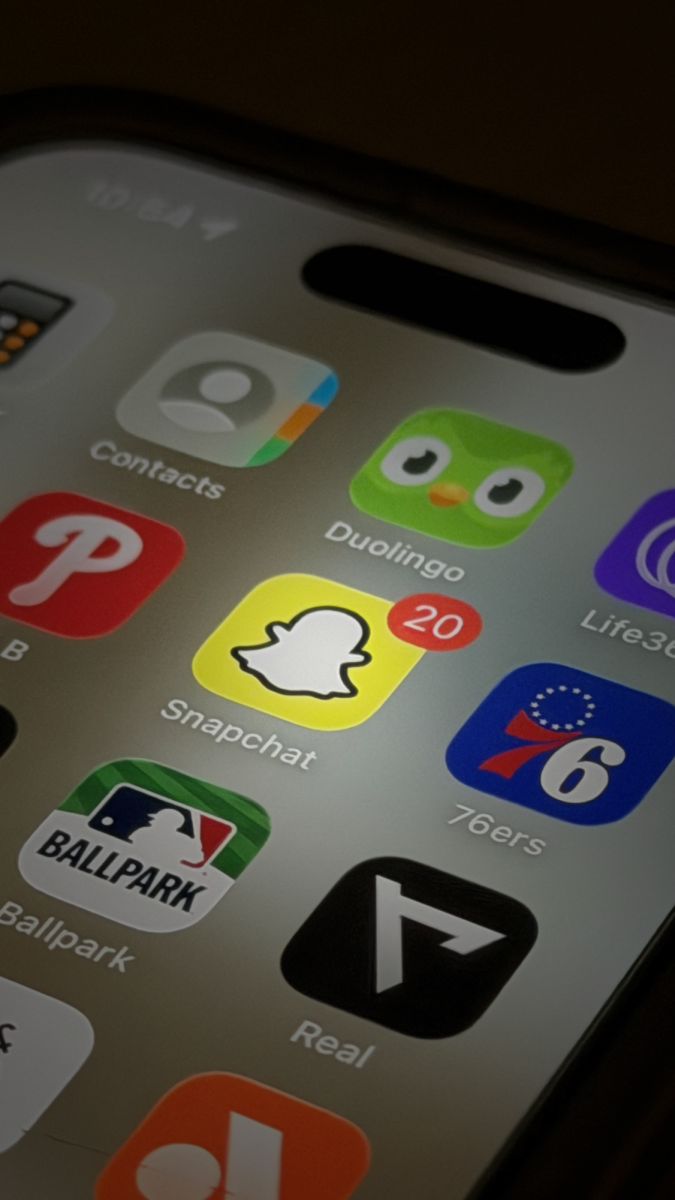
A 13th birthday is a monumental day in one’s life. It is the official age of becoming a teenager. It is also the legal age for people to download social media apps. However, millions of children are on the app before their 13th birthday. Social media plays a monumental role in most young adults’ lives, possibly leading to dangerous situations. Snapchat, specifically, is a dangerous app because of its unique features.
An aspect specifically on Snapchat is called My Eyes Only, which allows people to hide photos and videos in a password-protected folder within the app. It is used to keep certain snaps extra private and away from the eyes of other people. Users tend to keep personal and private snaps in this section of Snapchat.
“It gives people a false sense of privacy when it’s really not. People that work for Snapchat, people that work for Snapchat software, if they wanted to see what you put in your My Eyes Only they could,” said Elly Cicha (‘26).
Although it is portrayed as a secure and protected folder on Snapchat, nothing on the internet is completely private. This is one of the most dangerous characteristics of the app.
Another key feature of Snapchat is the deleting of messages and photos after they are viewed. This can result in a lack of accountability among users because they feel they can send anything without the fear of punishment or concern that it will be on the internet forever.
“The actual idea of having pictures and messages that instantly delete, it can’t be good,” said Cicha.
When Cicha had Snapchat in sophomore year, her account got hacked. She realized this a few days after she deleted her account when friends pointed it out to her. Cicha told her friends to tell people she got hacked, thinking the situation would come to an end. However, since Snapchat has Snap Map, which allows users to see their location and those they have added, the hacker was able to see Cicha’s location right before she deleted the app. The hacker then told a man, an East graduate, to meet at Cicha’s house. Coming home from dance practice one night, Cicha saw the man in front of her house. Luckily, she was not harmed and the situation is now resolved, however, Cicha shared that it was all very frightening.
“I wouldn’t have been able to [press charges] since everything deletes and there’s really no concrete proof,” said Cicha.
Snapchat can be an extremely dangerous social media platform for all users, regardless of age. The many features, although they are oftentimes what draw people to the app, can be very hazardous. Even if someone is handling the app with care, like Cicha was, a person can still be placed in an uncomfortable and dangerous situation.
“The ultimate determination of friendship is if they can see your private story,” said no one.
But they might as well have. There is an unspoken rule hanging over the heads of teenagers’ social lives on Snapchat: being on someone’s private story can feel like proof you matter to them, a ranking of your friendship.
The private story is a feature to share things with a small group of people. But somewhere along the way from the creation of the private story to today, it’s turned into something much more complicated.
“I kind of just [have] the people that I’m closest with [like] my best friends, and then the people that I’m close enough with that I talk to and interact with on a daily basis,” said Drew Spivack (‘26).
That’s how many view private stories, a space for friends to just see the inner workings of your life. But even Spivack admitted that people read into it more than they probably should.
“People think of it as a sign of close friendship, when in reality it’s just a story,” she said.
The issue here is it doesn’t feel like “just a story.”
When someone realizes they’re not on a private story, it’s hard to not take it personally, raising questions of are we actually close? Do they not like me as much as I thought?
And the confusion can only get worse because not all private stories are the same. Some don’t have one at all, and some have 30, 40, even 50 people on them.
Spivack pointed out that being on a smaller and more selective story could mean something, but on a larger one it doesn’t mean as much.So now, the problem is not only just being on the story, but about which story and how many people are on it, now creating this invisible social hierarchy.
“People update their close friends on their lives, and if you’re not a part of that, you might question whether you’re really their close friend,” Spivack explained.
The truth is, friendships are based on conversation, on shared life experiences, on getting to know each other. But if you throw in this hierarchy, a physical way to determine your “closeness” with a person, it’s hard not to let it mean more than it should.
Something as miniscule as a feature on Snapchat, something never meant to define a relationship, now holds the power to make people feel excluded. And maybe this is the real issue. That private stories do not actually define friendships, but they give off the illusion they do, and that can be strong enough to change how people see each other anyway.