





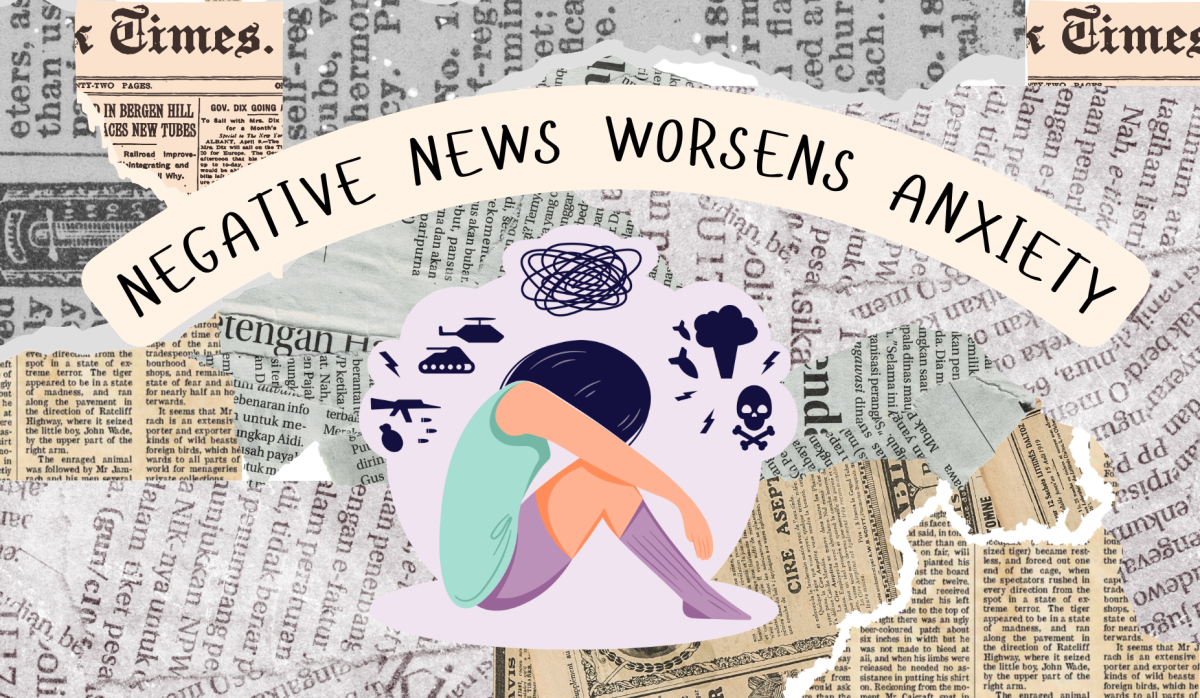









Many people check the news every day, whether it is to stay informed about current events or to simply pass the time. What people don’t realize is that constantly seeing negative news may lead to effects on mental health. Many different news sources, especially on social media, make news available all the time. Those who read all these types of news are more likely to be exposed to sensitive topics. Numerous studies have shown that reading too much negative news can increase the chances of depression and stress.
When people come across this type of news, their minds may react to the thought that they are facing a conflict or a threat themselves. This activates the “fight or flight” response of the body, which essentially exists to help us go through stressful situations. The brain releases stress hormones such as adrenaline and cortisol. These hormones cause an increase in heart rate and more tense muscles. This “fight or flight” response may be useful in emergencies, but constant use of this experience from negative news can leave people feeling constantly overwhelmed.
Negative news can also lead to physical and emotional stress. There are reports of headaches, difficulty sleeping, loss of focus, and increased feelings of worry after “doomscrolling” through sad stories. The emotional effects include, but are not limited to, hopelessness, fearfulness, and constant “on edge” feelings. Even if the events in the news are happening out of reach, the constant flow of tragic headlines can make people feel as though there is danger around every corner.
Another problem is the distortion of reality. Numerous news platforms focus on huge, dramatic events to attract more attention towards their own brands. This leads people to begin to believe that the world is more dangerous than it actually is. While there are some serious issues that exist on our Earth, the positive events don’t receive as much attention. This one-sided imbalance leads to people picturing more negative aspects of life.
Many experts have also posted warnings that negative news can become addictive. People start to naturally focus on possible threats, as the brain wants to stay prepared for any sort of danger. This may or may not form a cycle of someone feeling more anxious reading bad news, but constantly checking for updates as well. While traditional news outlets, such as CNN or the New York Times, make this hard to avoid, social media makes it even worse. The concept of “doomscrolling” and numerous notifications lead to users wanting to stay on and learn more. The feeling of staying informed, temporarily, can make people want more and more information, regardless of its large effects on their stress levels.
As news becomes more accessible than ever, finding a balance between staying informed and protecting mental health is even more important. Too much exposure to negative news can affect both the body and the mind. This makes it essential to consume information healthily and responsibly.
