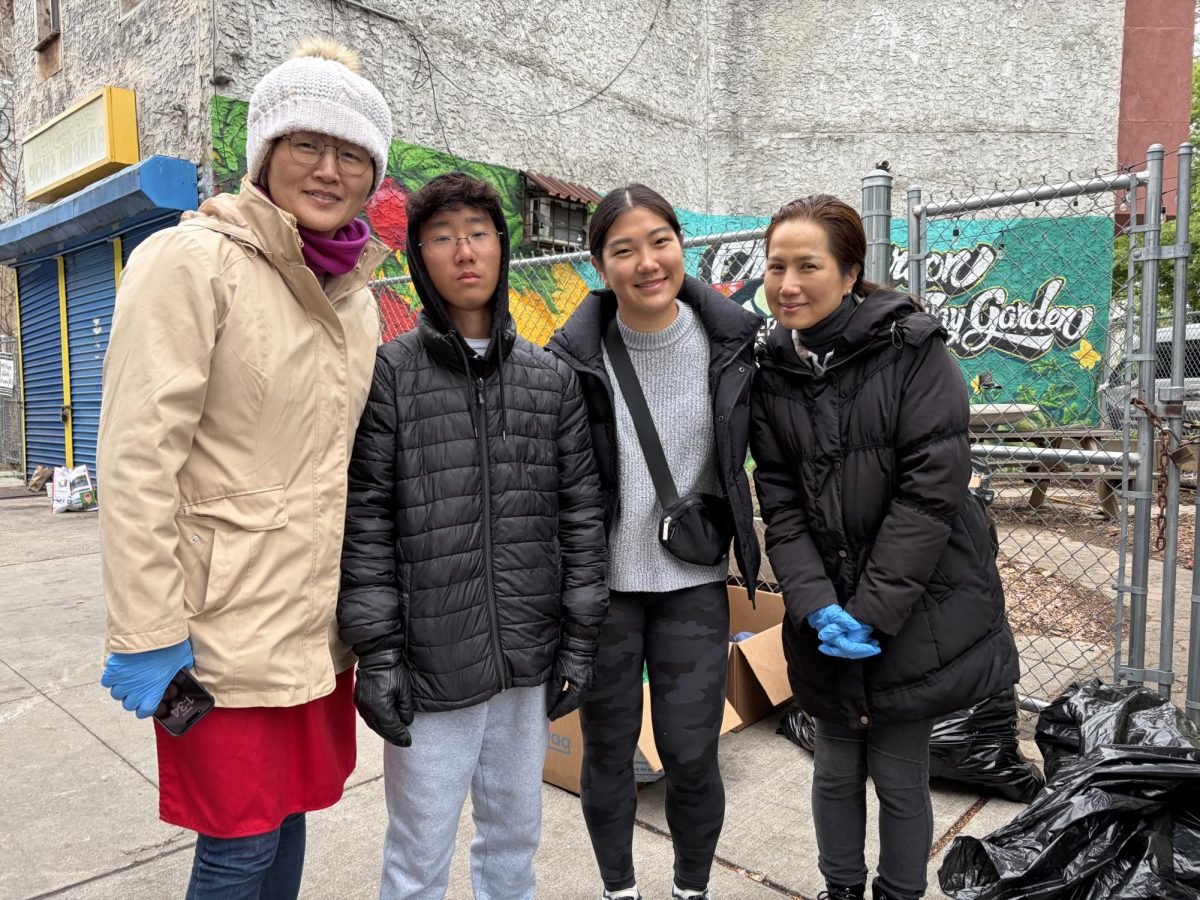






















On Saturday, April 25, I went to America’s largest open-air drug scene in Kensington, Pennsylvania. In the morning, I went with Emmanuel Church in Philadelphia to hand out T-shirts, food, and drinks for the people living there.
From the second we turned into the city area, there were people on drugs everywhere. It looked like I stepped into a zombie apocalypse. On my right, I saw people sitting around the subway station with nowhere to go because they had no home. On my left, I saw several addicts bent over, unable to walk because of how high they were. Looking at these people, I thought to myself, “How is my life so different from theirs, even though I live so close by?” Not even 30 minutes from my town—a safe, family-friendly suburban area—was a city filled with people barely able to function, barely able to breathe and living life at its minimum.
From the moment we began setting up food and T-shirt stations, people lined up, knowing that we would be giving out necessities. My group and I were in charge of distributing clothing and asking people if they wanted us to pray for them. Immediately, I started to notice the difference in mental alertness with the people living there compared to the society I was used to. Of all the people I met, almost everyone could not see straight, walk properly or speak intelligibly. It was clear to me that these people were stuck in a constant cycle of instability.
As I met more people, I realized how grateful I was to grow up in a safe environment. One of the most memorable people whom I met looked at me with the most mournful eyes and thanked me with immense gratitude. I only handed him a shirt and prayed for him, and it appeared as if his whole life had been uplifted. Then, he looked at my mom, who was standing right beside me, and began bawling. Even now, I’m not exactly sure what caused him to break down, but he stood there in the middle of the sidewalk for 15 minutes, crying in my mom’s arms with despair. Afterwards, he smiled, thanking us for our work.
For me, the most shocking moment was when I witnessed a group of people for whom I had prayed and handed T-shirts to settle right around a pole next to our station. Immediately, they began smoking. For the first time, I witnessed the way people actually get high. They poured a small packet of powder into these glass tubes before inhaling it. Of course, for a high schooler who has always been shielded from these influences, this was a huge shock. Very soon, these people began bending over themselves and started moving in slow motion, crouched down.
The night before, when my mom told me we would be going to Kensington, I wasn’t sure why I should. From my initial perspective, the people we were going to help were drug addicts who were never going to stop because of their strong addiction. But looking at those people made me start thinking differently. Even for just one second, I wanted them to stop smoking—and live in the moment instead. At first, I simply stood there in silence, giving out T-shirts with a bright smile, acting as if life was perfect. But soon enough, I couldn’t help but just stand there as if I hadn’t seen anything because I was there to help. So, I went over to the food station and began grabbing as many pizza slices as I could. If eating pizza was going to make them stop smoking for even just a minute, I wanted to help them.
Recently, my chemistry teacher, Mr. Falat, spoke about the effect of drugs on people and how, once someone gets hooked, they can’t stop their addiction. He informed us that lethal drugs like fentanyl and other opioids have been a driving factor in deaths caused by overdose. After listening to this, it placed drug addiction into more perspective for me. I never understood the proper dangers of drugs because I had never experienced them firsthand or second-hand, living in a sheltered environment. But seeing this addiction live on the streets right after hearing about it made me realize that this kind of threat was taking a human being and reducing them to their most vulnerable state.
Presently, I don’t know how big an impact my church’s visit made on the people of Kensington. But I do hope that at least one person I met is now sleeping safely with their stomachs filled and wearing their “Jesus Loves You” T-shirts. I understand that the time and effort it will take to eliminate or at least reduce these drug addictions will be almost an eternity. But through this short mission trip, I felt motivated to do more. Seeing one man crying in my mom’s arms made me wonder, “Is this the first time he’s been seen? Has no one else been there to get him out of this endless loop?” Because if volunteers like us never come to support these addicts, they will become trapped in that cycle for eternity. While I know this isn’t exactly life-changing for them, I can move on knowing that I made at least one person smile.
Witnessing the level of suffering the people of Kensington have gone through changed my perspective on humanity. If you ever see someone struggling, whether it’s through drug addiction, physical disease, or even mental conditions, I hope you take the time to listen to their story and allow them to feel seen.