The threat to checks and balances: Congress and the Supreme Court must stand up to Trump


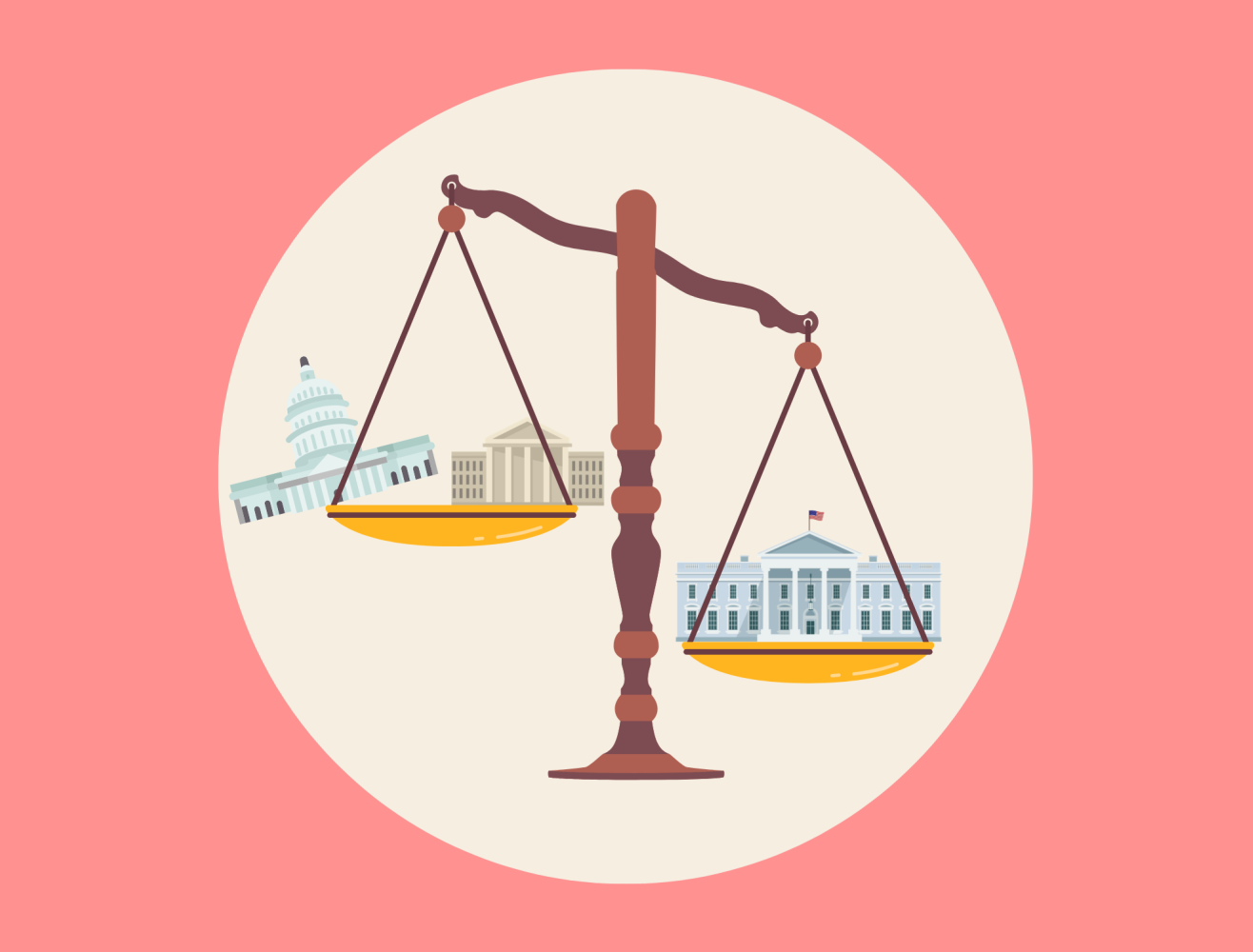
Under Article II of the Constitution, the president serves as the head of the executive branch, and is responsible for enforcing federal laws, commanding the military as commander-in-chief, and conducting foreign policy. The president also has the power to sign and veto legislation, issue executive orders, and grant pardons for federal crimes. However, presidential authority is limited by a series of checks and balances: Congress can create laws, and the Supreme Court can decide constitutionality.
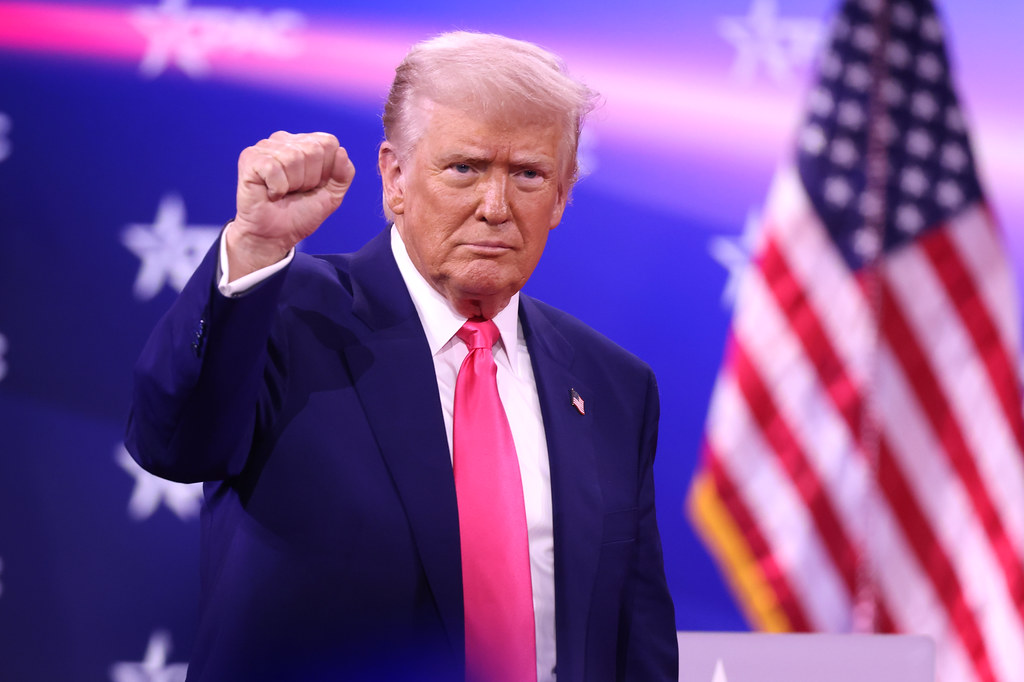
However, in recent years the executive branch and its powers have expanded, particularly during President Donald Trump’s terms, through the extensive use of executive orders that have tested the Constitution and presidential authority. Across both terms, Trump has issued roughly 475 executive orders, and through actions such as attempting to restrict birthright citizenship, bypassing the War Powers Act, and introducing the idea of running for a third term, Trump has demonstrated a pattern of executive overreach and unconstitutional behavior.
“Just because President Trump or any president for that matter, [has] a specific item they want to accomplish, it still has to work within the confines of the Constitution,” said Mrs. Cindy Warren, who teaches AP World History and Honors World Civilizations at East.
The 14th Amendment states that any person born on United States soil is a citizen, regardless of their parent’s status of citizenship. However, Trump has attempted to challenge the scope of birthright citizenship through the executive order, “Protecting the Meaning and Value of American Citizenship,” which sought to end birthright citizenship for children born in the U.S. to undocumented immigrants or those with temporary status. The re-interpretation of the Constitution to mold the ideas he deems necessary ultimately expands the powers of the executive branch and shows a clear overreach of power.
Furthermore, as tensions between the U.S. and Iran escalated again, Trump did not seek congressional approval before ordering major strikes. Yet, the War Powers Resolution states that a president must acquire prior authorization from Congress before deploying troops.
“The war in Iran … and the attack on Venezuela … None of that got any kind of congressional approval,” said Mrs. Megan Mikulski, who teaches AP U.S. History and Honors World Civilizations at East. “According to … the War Powers Act of 1973, after 60 days, the president has to get congressional approval for [war].”
Additionally, the 22nd Amendment states that the president can only serve two four-year terms in office. Yet, Trump has already begun to discuss the idea of running for a third term, despite the clear constitutional limits. Many Republican senators have refused to directly address the claims, and instead attempted to create pathways for Trump to run for president in 2028.
“[A U.S. President has] to be elected twice, and then has [up to two terms], and [then the] time is over,” Warren said. “Frankly, I don’t see a constitutional pathway for [Trump] to try and [run for a] third term in office. I don’t see anything that would substantiate his ability to do so.”
Ultimately, Trump’s actions throughout his two terms reflect a growing expansion of executive power and presidential power that will continue to trample on checks and balances unless opposed. If Trump overexerts executive privilege, takes emergency powers for granted, and cannot interpret the Constitution correctly, other branches of government must intervene to increase accountability and uphold the balance of power.
The United States Constitution delineates the powers of the judicial branch in government, granting the Supreme Court of the U.S. the jurisdiction to interpret laws, enforce the system of checks and balances and limit political tyranny. Since its establishment in 1789, the Supreme Court has exercised such authority, acting as a definitive source of decision in cases that range from press rights to abortion. However, during President Donald Trump’s terms in office, the judicial branch has arguably failed to adequately challenge executive overreach, with party loyalty often taking precedence over constitutionality.
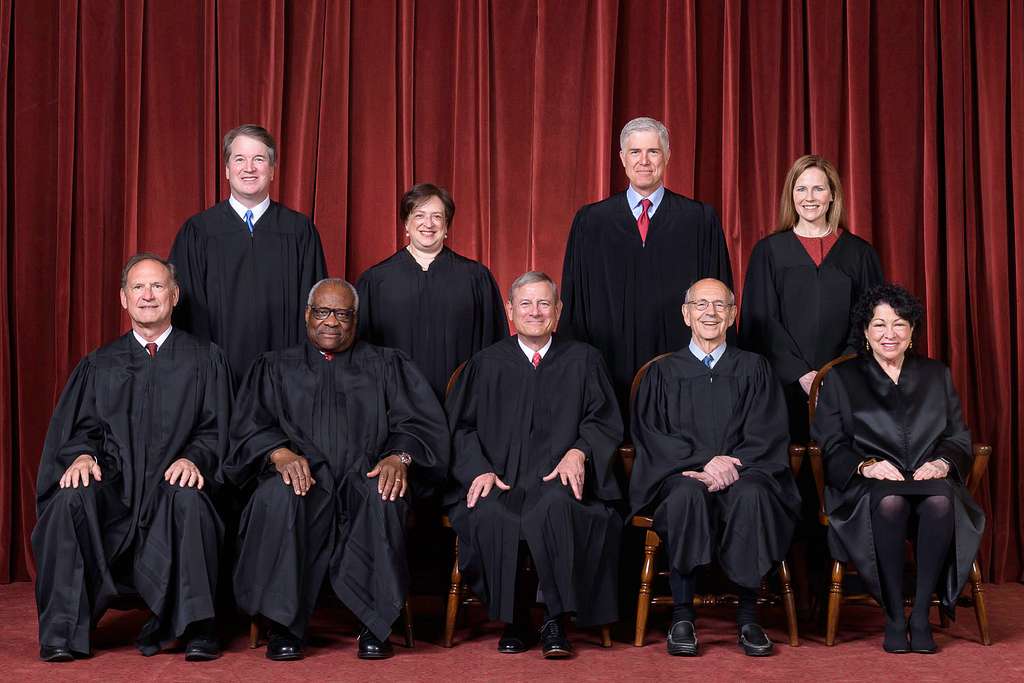
The Supreme Court is the highest source of authority in judicial review, consisting of nine justices that interpret the Constitution and use the document to make legal decisions. Of the members of the current Supreme Court, three were nominated by Trump: Neil Gorsuch, Brett Kavanaugh and Amy Coney Barrett.
“[Trump] create[d] what many people say is the conservative super majority,” said Mrs. Meghan Mikulski, who teaches AP U.S. History and Honors World Civilizations at East. “[This] has allowed for rulings that, … in many cases, as I say, have expanded executive power, and in one case, completely overturned major Supreme Court decisions, [like] Roe v. Wade.”
Throughout Trump’s terms in office, he has attempted to force a number of decisions that many deem unconstitutional, justifying them with the vague term “executive order” — or a presidential declaration.
Furthermore, Trump has stated multiple times that he aims to run for a third term, disregarding the 22nd Amendment, which strictly prohibits a president from serving more than two four-year terms. Regardless, Trump’s appointed justices have had little to comment on the idea, and some Republican senators have even suggested a constitutional amendment to allow a third term.
“The 22nd Amendment is very clear that a president is restricted to two elected terms of [presidency],” said Mrs. Cindy Warren, who teaches AP World History and Honors World Civilizations at East. “Frankly, I don’t see a constitutional pathway for him to try [and run for a] third term in office.”
The Supreme Court has the authority to enforce the Constitution in regard to each executive order Trump passes; however, such restriction has been falling short throughout his presidency. For example, the Trump administration has shut down Temporary Protected Status serving immigrants and even passed multiple travel bans — all without any objection from his appointed justices. This ultimately only demonstrates that several of the justices on the Supreme Court value their loyalty to the Republican Party more than the Constitution and its values.
“I would like to think all members of the Supreme Court follow the Constitution and not party allegiance, but I do think it points to the powers of the presidency in their ability to appoint or select… Supreme Court [justices],” Warren said. “I think people look very short term with a four-year presidential election and then the future election term cycle, but … there is no term limit on the Supreme Court justices.”
One of the most controversial examples of partisan benefit is Trump v. United States (2024), when the Supreme Court ruled that former presidents have broad immunity for official acts while in office. This decision made it harder to hold Trump accountable for his efforts to manipulate the 2020 election, during which he pressured former Vice President Mike Pence and the Department of Justice to reject certified votes through claiming that the election was corrupt. All six of the conservative justices voted in favor of granting Trump presidential immunity, leaving only three liberal justices to dissent.
Aside from partisan loyalty, the Supreme Court’s overall leniency has increased, with less restrictions on executive orders passed during Trump’s time in office.
“The court has actually expanded executive power over the past few years, ruling after ruling, saying that presidents cannot be held accountable for crimes,” Mikulski said.
Even in instances when the Supreme Court has challenged the president’s actions regarding the Constitution, Trump has retaliated by publicly attacking his own appointed justices for not siding with him, aiming to reinforce partisan loyalties.
In February, the Supreme Court voted against Trump’s 10% global tariff in a 6-3 decision. Justices Gorsuch and Barrett, both of whom Trump appointed, had sided with the liberal members to declare the plan unconstitutional. In response, Trump degraded the justices, stating that they were a shame and disappointment for voting against his administration’s plan.
However, despite the seemingly negative implication of declaring unconstitutionality in a government divided by party and set in conservative values, the Supreme Court has been granted such duties: to preserve a separation of powers, prevent injustice, and limit excessive overreach. Regardless of the conservative majority that continues to lead the Supreme Court, the justices must stand up to Trump’s executive overreach — even when he demands loyalty — in the name of checks and balances.
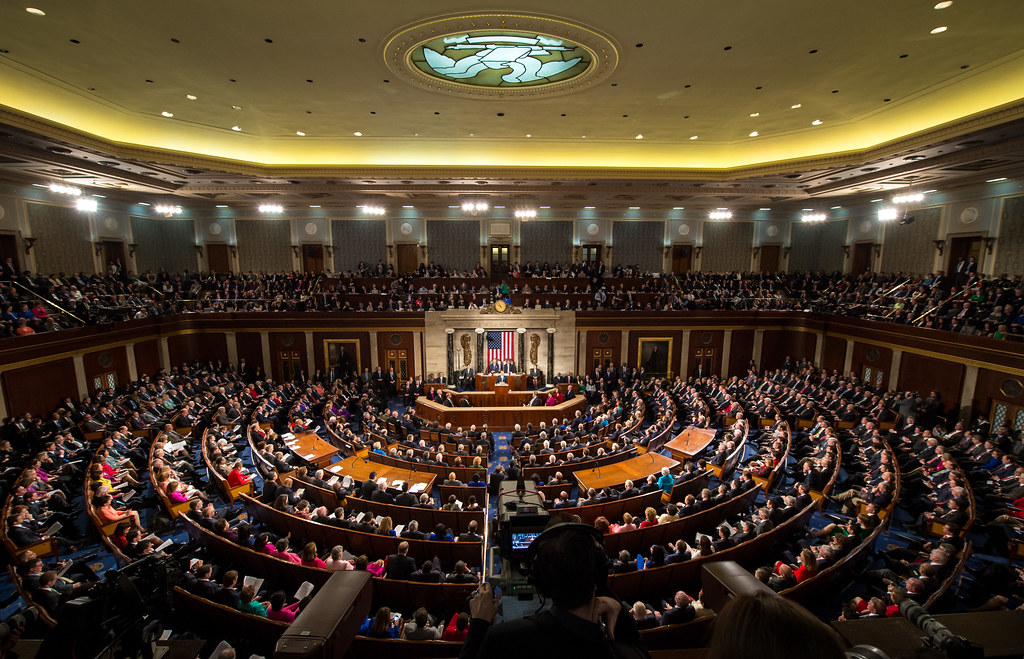
Within the Constitution, the founding fathers purposely provided Congress with distinct powers that the president did not possess, fearing the return of a tyrannical monarchy like that of King George III. As a result, the legislative branch has the ability to create laws, declare war, and collect taxes. However, today, Congress has devolved into a battleground of party loyalty and polarization, ultimately weakening the unity and overall power of the legislative branch. Regardless of party affiliation, Congress must utilize these exclusive powers to limit the executive overreach of President Donald Trump’s administration and defend the separation of powers outlined in the Constitution.
In Trump’s war against Iran, which has been fought mostly through executive action, there has been controversy over the war’s legality without congressional authorization. According to the War Powers Resolution of 1973, conflicts that last longer than 60 days after troop deployment must be put up to vote by Congress. With invasions in Iran beginning on Feb. 28, this window has already concluded; yet, Congress has not confirmed their approval, neither through a war declaration or military authorization.
“There was an attempt to pass an updated War Powers Act. That attempt failed,” said Mrs. Meghan Mikulski, who teaches World Civilizations and AP U.S. History at East. “But now the administration is saying that … we’re in a ceasefire, so the clock has stopped.”
Despite abuse of allotted power, many congressional legislators fail to oppose executive measures out of party loyalty.
“I think we’ve seen on both sides of the political spectrum … that party loyalties are going to favor the actions of the president that falls into their political party,” Mikulski said. “Party affiliation is not new, but what we’ve seen ever since 2000 is that party polarization [causes parties to not] be able to compromise.”
Another obstacle that exacerbates the issue of party tensions, lessening Congress’ ability to check other branches, is the use of gerrymandering. This method involves reorganizing state districts to optimize representation of a specific party; recently, gerrymandering has seen a large increase, with Trump supporting and even requesting the redrawing of states like Texas. Other states, like the largely-Democratic California, have followed suit in opposition to the increasing Republican representation.
“Because of gerrymandering, it’s really hard to get congressional candidates — Republican or Democrat — into office that are going to reach across the aisle [and] who are gonna compromise,” Mikulski said.
Overall, gerrymandering acts as a means to change Congress’ makeup, making it ultimately harder to oppose the actions of the executive branch when vast political polarization is present.
Furthermore, congressional action is even more vital — and achievable — as the 2026 midterm elections approach. With voters able to determine who holds seats in the House of Representatives and Senate, Election Day will open doors for reevaluation and, possibly, a growing movement toward executive restriction.
“The midterm elections are usually a referendum on the current administration,” Mikulski said. “It’s a good way to see how the people feel about what that administration is doing. Usually, the party that is not currently in power is kind of energized, so you usually get the dominant party losing some kind of influence.”
Ultimately, in order to preserve the balance of power that the founders sought, Congress is obligated to challenge executive overreach. Allowing for one branch to dominate over another violates the very ideals of the United States and the nation’s initial hope to limit tyranny and protect the natural rights of all.
Through speaking out against Trump’s unlawful policies and actions that put equality in jeopardy, Congress can exercise their rightful authority to challenge excess power, creating a more just government to represent a nation that strives for liberty and justice for all.