













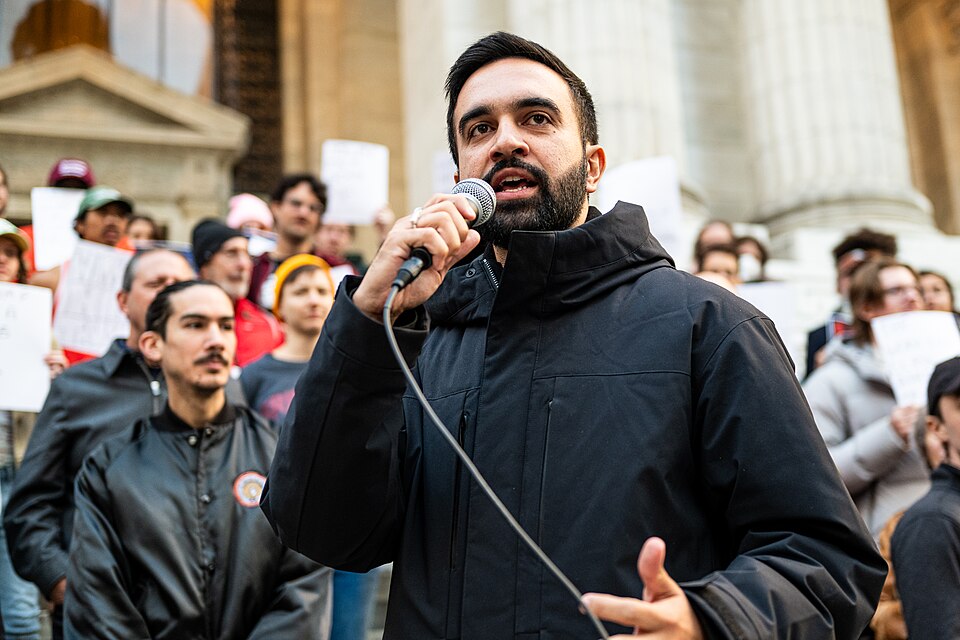






Zohran Kwame Mamdani, a once obscure New York State Assemblyman, defied expectations by defeating former Governor Andrew Cuomo in the Democratic Primary, and ultimately won his election as New York City Mayor. Mamdani’s election captured national and international attention, with news outlets around the world documenting his unprecedented success. While Mamdani’s campaign was unique in its ability to connect with voters, the wave of the progressive youth movement inside and outside of New York City encapsulates how Mamdani has made history. Not just by being elected mayor, but by inspiring the new face of government.
During the mayoral election, Mamdani sought to engage young voters by using social media to portray himself as a relatable New Yorker and connect with a generation that often feels disconnected from traditional politics. His campaigning methods proved successful: according to exit polls, 75% of youth voted for Mamdani, and 11% of all ballots were cast by young voters. However, the youth momentum Zohran gathered did not end with his victory. In the two weeks following his Democratic primary election, 10,000 people signed up with Run for Something, a nonprofit that recruits progressive candidates under 40 for local and state office. Following his general election, the organization reported a surge of 2,000 sign-ups, demonstrating the broader impact of the Mamdani effect, and how his campaign has encouraged young people to participate in a political system where many previously felt overlooked.
However, the Mamdani effect did not end with inspiring young voters. In the months that followed, he endorsed three progressive candidates seeking office, each of whom went on to win their Democratic primary. Their victories were especially significant because each defeated a well-established political figure. Brad Lander and Darializa Avila Chevalier unseated two members of Congress, while Clarie Valdez defeated Brooklyn Borough President Antonio Reynoso in a closely watched primary. Together, these victories demonstrated that Mamdani’s influence extended beyond his own campaign, helping fuel a broader movement for progressive leadership.
The Mamdani Effect represents more than his own election and campaign, rather a broader shift in how young people view their role in politics. By connecting with the youth through grassroots movements, utilizing social media, and engaging with people who felt like their voices and votes didn’t matter, Mamdani built a movement that challenged traditional ideas about political participation. His ability to mobilize young voters helped him win an extremely close election against well-established politicians, and proved that a campaign that truly connected with the people would overcome the tribulations of traditional politics. Yet, he unknowingly inspired a new face of government, reflected through the election of his progressive-endorsed candidates, and the thousands of young people who no longer feel estranged and helpless in their role in politics. His campaign showed young voters that they were not simply observers of the political system, but active participants capable of shaping its future. While the long-term impact of the Mamdani Effect remains uncertain, his rise has already encouraged a new generation to believe that they possess the power to make meaningful change.