


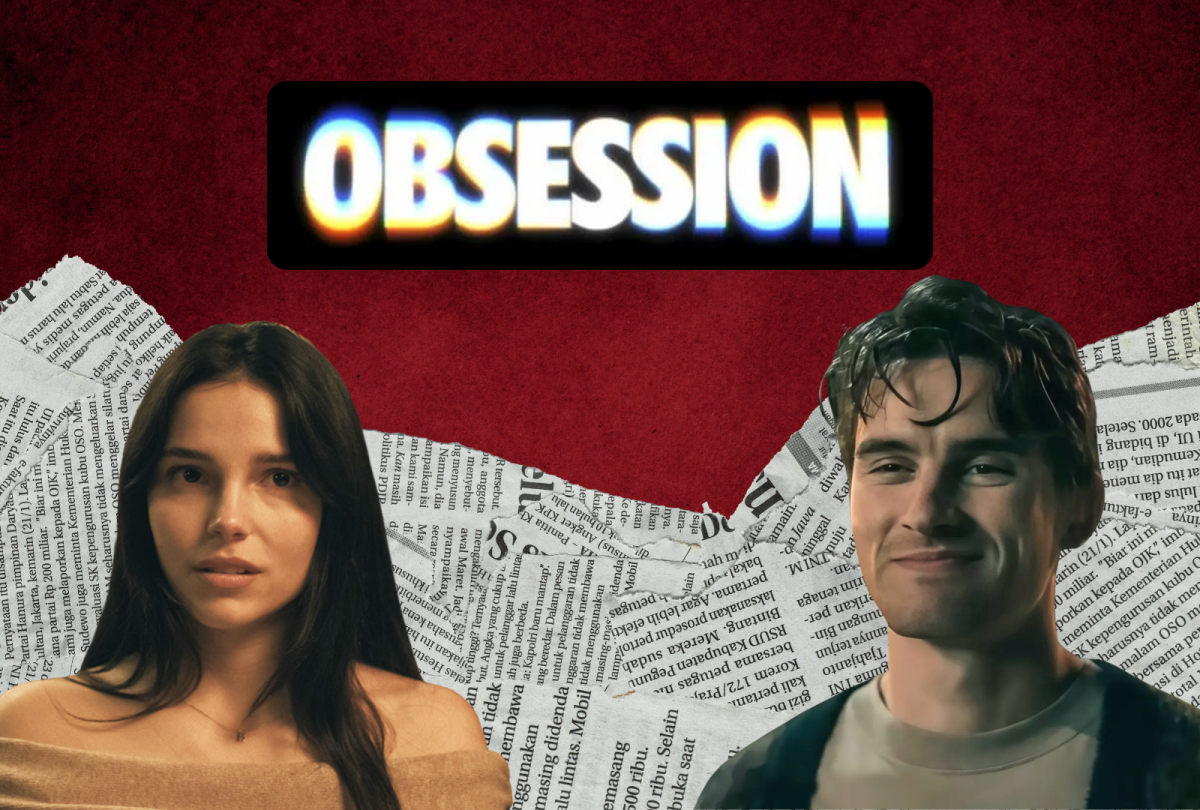










“Wuthering Heights” (published in 1847) is a well-renowned classic by Emily Brontë, groundbreaking in its defiance in Victorian-norms of romance, portraying raw, violent and obsessive love as opposed to traditional morality in it of the time. The book challenges classism through the flawed and complex characters, creating a timeless impact in which its masterpiece is still recognized today. On the other hand, Emerald Fennell’s film “Wuthering Heights,” released in February of this year falls quite short of these high expectations. Starring Margot Robbie and Jacob Elordi, “Wuthering Heights” received only a 6.2/10 rating on IMDB with reviews stating the film’s lack of depth, calling it a “movie for generation BookTok” which I feel is more than valid.
“Wuthering Heights” is beautifully shot, to say the least. The movie is filled with symbolic imagery in terms of set design and fashion, and the beautiful fields in which many of Heathcliff and Catherine’s scenes are filmed capture the wildness, power and beauty in their characters. Linus Sandgren— cinematographer and director of photography on set— does a fantastic job in emphasizing wonderful, rich colors in the film that incite intense emotion in the viewer.
Speaking of color, however, the adaption faces accusations of whitewashing and ignoring the original work’s racial themes. In the original text, Heathcliff is described as “dark-skinned” and strong themes of racism and prejudice, which the movie’s depiction of Heathcliff’s character strays away from with the casting of Jacob Elordi.
The biggest issue that stood out to me was the over-eroticization of the story. The film lacks the book’s strong themes of racism and classism. It takes Emily Brontë’s accomplishment of publishing a book of this nature as a woman in the 19th century into what is essentially pornography. It is such a shame to see the potential that a wonderful story with wonderful cinematography and actors wasted on something that has truly been “Tiktokified.”
With all this said, I am still grateful to have the opportunity to see this movie at my local theater, for I believe that there is nothing quite like seeing a film as a community on the big screen. I urge all readers to continue to support the movie theater industry by buying tickets (and maybe a popcorn) to see their soon-to-be favorites before it’s too late.