


















A thick haze hangs over Tehran, but this is no ordinary smog. In early March 2026, following a series of airstrikes on fuel depots and oil infrastructure around the capital, the sky turned darker still. Massive oil fires burned for days, and in their wake came a phenomenon described as “black rain,” oil, acidic soot falling from the sky, settling onto streets, homes, and lungs.
For many Iranians, the attacks marked a turning point in a crisis that had already been years in the making. Long before the strikes, the country was grappling with a severe environmental breakdown driven by relentless drought, worsening air pollution, and systemic mismanagement of natural resources. Now, conflict has intensified those pressures, compounding what experts describe as an increasingly fragile ecological system.
While the strikes primarily targeted oil infrastructure, their environmental consequences have been far-reaching. By late March, the Conflict and Environment Observatory (CEOBS) had recorded over 400 environmentally significant incidents linked to the conflict, highlighting the scale of ecological disruption.
Yet even without these attacks, Iran’s water crisis had already reached alarming levels. The country entered 2026 in its sixth consecutive year of drought. Nineteen major dams had fallen to less than 5% capacity, and groundwater reserves have been steadily depleted for years. Between 2003 and 2019, Iran had lost 211 cubic kilometers of groundwater, leaving aquifers dangerously strained.
The causes are both natural and man-made. Reduced rainfall linked to climate change has played a role, but decades of poor water management have intensified the impact. Nearly 90% of Iran’s water is consumed by the agricultural sector, much of it through inefficient practices. By late 2025, officials had even raised the possibility of evacuating parts of Tehran due to severe water shortages.
Natural water sources are also faltering. Snowpack in the Alborz Mountains–Tehran’s most important natural water reservoir–has dropped to some of the lowest levels recorded in decades. According to Climate Rights International, the five key reservoirs supplying the capital now hold less than one-third of water needed for a typical year. The Latyan Dam, one of the city’s primary sources, operates only at 9% capacity. Rainfall has been almost nonexistent, with just 1.1 millimeters recorded in Tehran by mid-November, a 95% decrease.
Meanwhile, the air itself has become a hazard. Even before the 2026 attacks, cities like Tehran frequently experience extreme smog, contributing to widespread respiratory illness and premature deaths. The recent oil fires have only worsened these conditions, adding layers of industrial pollution to an already dangerous atmosphere.
Environmental experts warn that the damage from the strikes represents a series of “flash environmental disasters,” sudden, severe impacts that may take decades to fully address. Contaminants from burning oil and damage infrastructure risk seeping into soil and water systems, creating long-term ecological and public health consequences.
In response, Iranian officials have turned to a range of several technical solutions. These include cloud-seeding operations, a method of stimulating precipitation by dispersing particles such as silver iodide into clouds, as well as plans to develop large-scale desalination plants along the Persian Gulf to convert seawater into drinkable water. While these efforts may provide some relief, critics argue they do not address the deeper structural challenges driving the crisis.
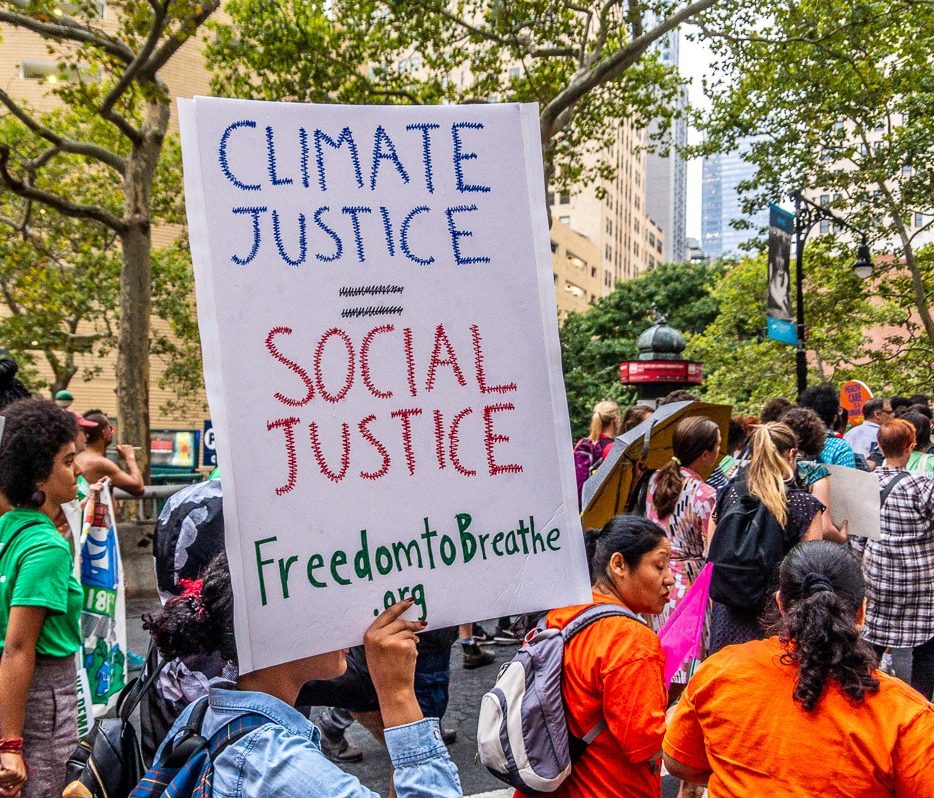
In recent years, water shortages have sparked protests in several provinces, with communities demanding fairer distribution and more effective management of dwindling supplies. In some cases, their demonstrations have been met with force. International organizations reported that at least nine people were killed during protests in Khuzestan, while widespread arrests of protestors in Isfahan in 2021.
Iran’s response to the crisis falls short of its obligations under the International Covenant on Economic, Social and Cultural Rights (ICESCR), which protects the human right to water. United Nations bodies have repeatedly emphasized that governments must manage resources sustainably and ensure communities can participate in decisions affecting their water security, especially as climate impacts intensify.
What is unfolding in Iran is not a single crisis, but a convergence of many: climate change, resource mismanagement, industrial pollution, and armed conflict colliding at once. While short-term technical solutions may offer limited relief, the scale of the challenge demands deeper structure change. Without it, the environmental pressures already reshaping daily life in Iran risk becoming permanent, with consequences that extend far beyond its borders.
