We attended Philadelphia’s third No Kings protest. Here’s what we witnessed.


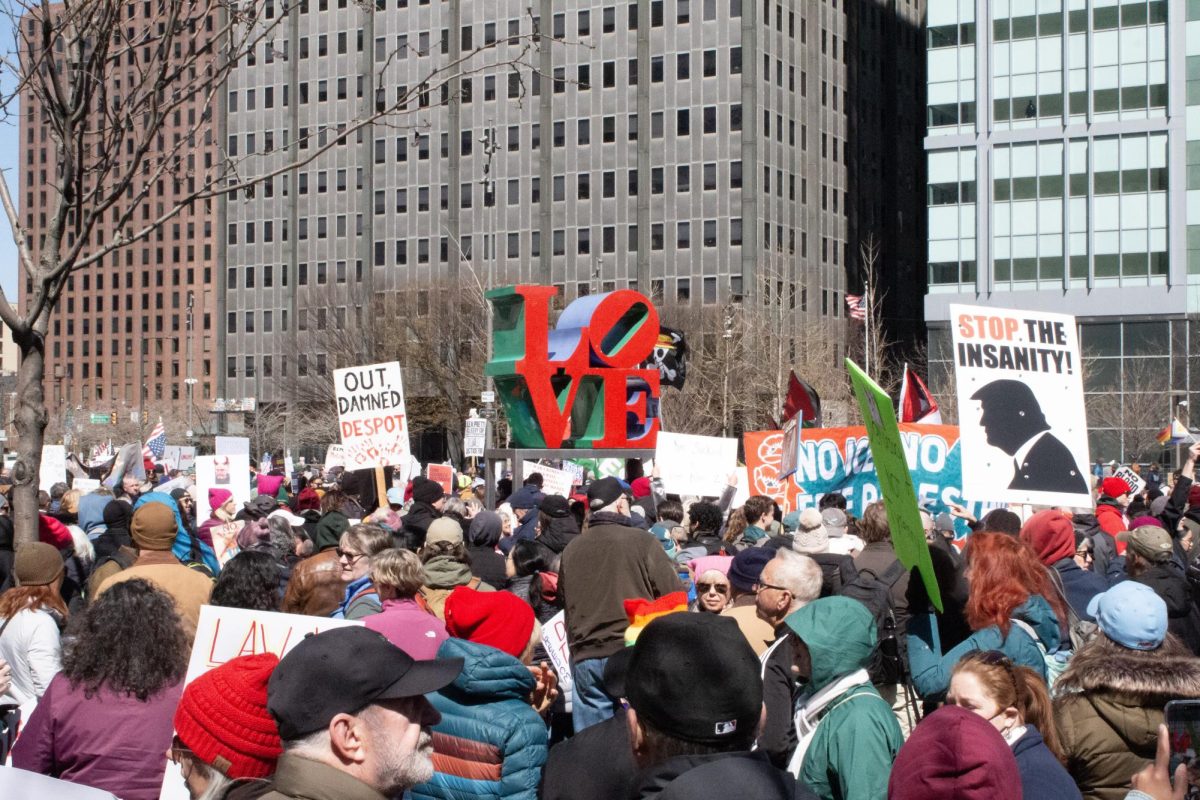
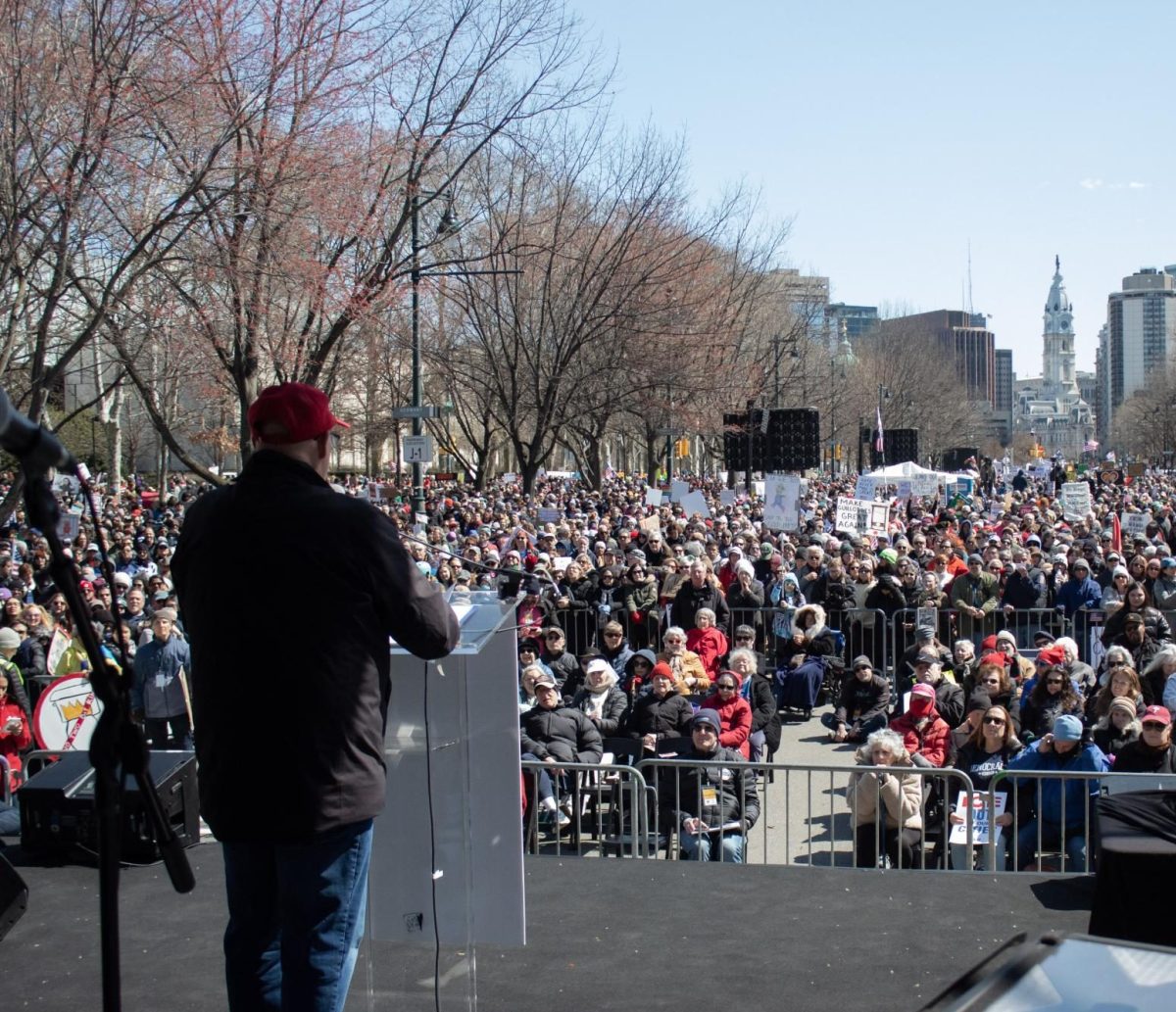
Philadelphia’s third No Kings protest had slightly under an hour of speeches during the rally from prominent politicians, activists, and community figures running from 1:24 p.m. to 2:13 p.m. at the intersection of the Benjamin Franklin Parkway and 22nd Street. Opening the rally was Indivisible Philadelphia leader and organizer of the Philadelphia No Kings protest Vicki Miller, who briefly gathered the attention of the crowd and restated the goals of the protest.
The first speaker was Rep. Brendan Boyle (D-Pa.), who had planned to present his speech in-person, was unable to attend due to a late vote in Congress. As a result, Boyle instead recorded a video of his speech to be displayed for the protesters, in which he criticized the decision of the U.S. House of Representatives to reject the compromise that would stop Immigration and Customs Enforcement (ICE) funding and pay for Transportation Security Administration and Federal Emergency Management Agency workers.
“We have a president who cares more about building his big beautiful ballroom and etching his name in legal on the John F. Kennedy center for the Performing Arts than … working people and the poor and middle class of this country,” said Boyle.
He criticized the American involvement in the war with Iran, which skyrocketed prices of gas across the nation, and ended his speech stating his solidarity and appreciation for the protesters’ patriotism.
Following him was Michael Coard, the founder of Avenging the Ancestors Coalition (ATAC), a group of activists that, in 2002, began to push for the institution of Independence Mall’s Slavery Memorial at the President’s House, which was eventually created in 2010, commemorating George Washington’s slaves. In January, the site was removed, prompting ATAC to take legal action against the government, which ultimately resulted in the restoration of the memorial by February. Coard asked the protesters to continue their activism and join ATAC.
Philadelphia Mayor Cherelle Parker was the next speaker, conveying her message through a short video, in which she asked protesters to stay up to date on local news, protect their immigrant neighbors, and understand their rights.
The third speaker was Arthur Steinberg, the president of Pennsylvania’s American Federation of Teachers. His speech emphasized the role of education in protecting democracy, declaring teachers were “proud to be educators, proud to work in the schools, [and] proud to be here today.” Steinberg told the crowd to “reject bigotry, hate, [artificial intelligence] slop, and MAGA foreign terrorism.”
Erika Alexander, an actress and political activist, briefly spoke in a video shared to the audience afterward. She applauded the various attendees for practicing their First Amendment rights, emphasizing that “success depends upon everyone making a difference in the ways that [they] can.”
Alexander ended her speech by drawing parallels to America’s Declaration of Independence 250 years ago, congratulating people who have boldly stood up for their rights just as the founding fathers once did.
The following speech was given by Rev. G. Lamar Stewart Sr., who brought up how his unique experiences as a pastor, Iraqi war veteran, police officer, and district attorney each shaped his outlook on life and politics. Including an anecdote from his grandmother, Stewart finished his speech with a quote from civil rights activist Howard Thurman.
“Don’t ask what the world needs; ask what makes you come alive and go do it, because what the world needs are people who have come alive,” said Stewart.
Rep. Madeleine Dean’s (D-Pa.) speech followed, in which she compared President Donald Trump’s actions to those that King George III was criticized for 250 years ago. She stated multiple reasons for the American Revolution, such as unjust taxation and irrational standing armies, that remain prevalent in today’s government.
Most notably, she stated that neither Trump nor George, “[have] refused Assent to Laws, the most wholesome and necessary for the public good.”
She continued with an anecdote about her experience visiting an immigrant detention camp with 70,000 people in Dilley, Texas two weeks prior to the protest where she, along with other members of Congress, saw families who were sick and traumatized while facing medical, mental, and educational neglect from the facility, which had 50 ICE agents, 610 employees, yet only a single teacher.
“We witnessed an absence of humanity at this for-profit detention camp,” said Dean.
The final speech was by Sen. Vinvent Hughes’ (D-Pa.), in which he conveyed an optimistic message, emphasizing the immense impact that each individual can make. He encouraged people to register to vote, encourage others to vote, knock on doors, make phone calls, and post on social media.
In the remainder of his speech, Hughes energetically chanted with the protesters, “when we fight, we win,” before leaving the protesters with a final mission to continue their efforts after the protest.
“Think in your mind what you’re [going to] do when you leave here to keep this fight going,” Hughes said.
At 2:13 p.m., Miller concluded the rally with a final message: “Taking action relieves your anxiety. That is true. That’s why we do it.”
After the speeches, the Philadelphia-based, seven-piece band SNACKTIME performed for the remaining protesters. Although most of the protesters stayed for the first song, many began to leave the rally after, and by 2:34 p.m. most of the protesters had left the rally, with only about 1,000 remaining to listen to the band’s music. At roughly 2:58 p.m., the band stopped playing, officially ending the protest and rally.
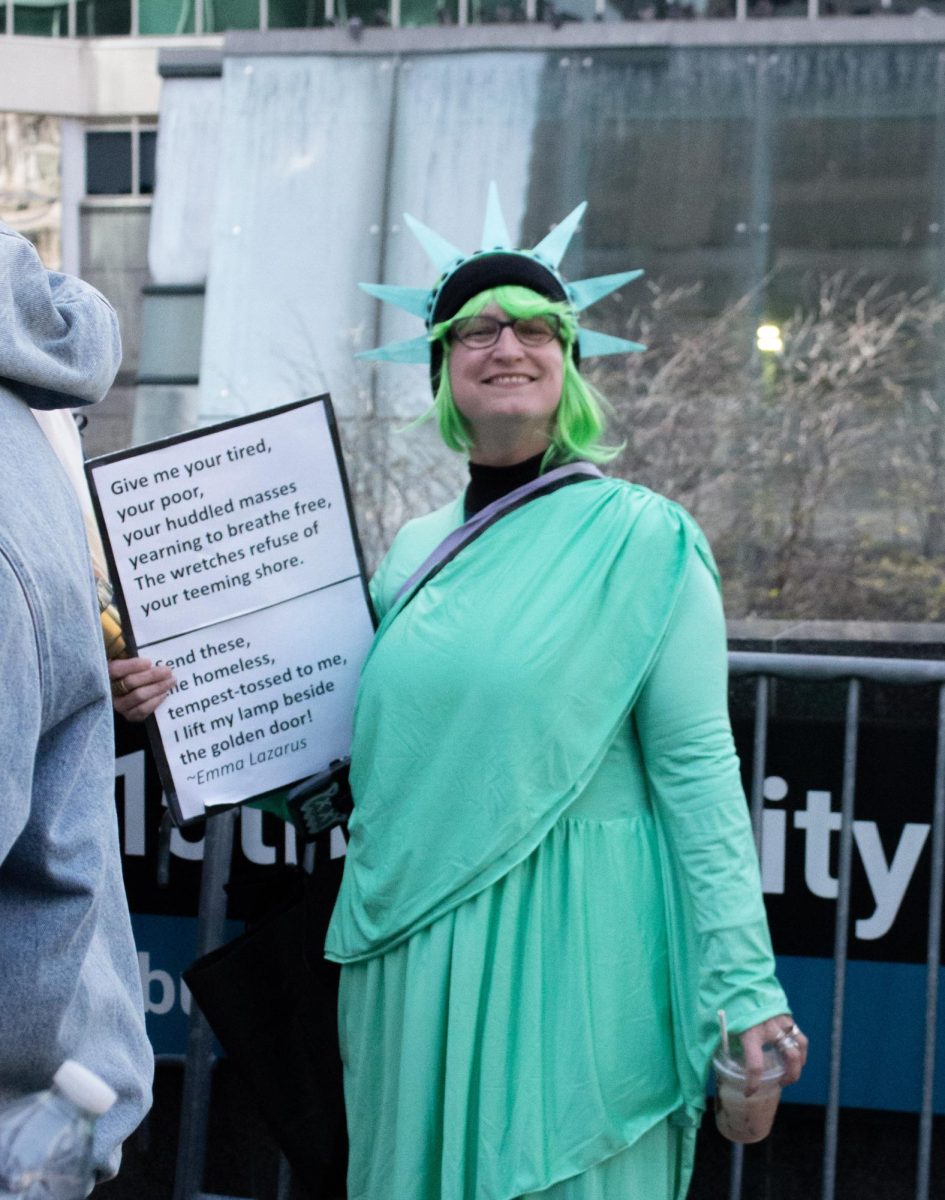
“I’d like to see the president impeached and convicted … and I’d like to see Congress do their constitutional duty and not abdicate responsibility to the president,” said Norm, 68, a protester from Delaware County, Pa.
Norm was one of many at the most recent No Kings Philadelphia protest who called for the end of President Donald Trump’s reign. Among the sea of protesters, reasons for attending the protest varied, from indignation over the actions of Immigration and Customs Enforcement (ICE), to outrage over Trump’s most recent controversial actions, to grievances with long-standing nationwide issues of healthcare and taxation.
In individual interviews with Eastside, several protesters shared their reasons for attending, views on the efficacy of protests, and changes that they would like to see.
“I myself am very disgusted by the fascism that’s taken over the country,” said Patrick, 31, from Westchester County, N.Y., echoing similar sentiments to other protesters regarding Trump’s recent actions, particularly in the Iran War, his fund-freezing campaign, and his anti-immigration operations.
“Our country is built on immigrants and they’re trying to kick them all out and kill them,” said Sarah, 30, Westchester County, N.Y.
Despite the numerous frustrations, many protesters remained optimistic and determined in their struggles.
“We’re not going to just lie down and let our constitutional rights be stripped from us,” said Norm.
“I think at times like this where everyone’s trying to maintain their own sense of normalcy, it’s nice to be around people who take these things just as seriously,” said AJ, 28, from Philadelphia.
Others even described feeling an immense emotional impact from the unity displayed at the protest.
“When I got here today, for the first time in a long time, I cried because I felt that we’re not alone, and we need to know that we have each other … even if I’m old and you’re young. We all have a sense of humanity and caring for each other,” said Billy Stuart, 82, from Cape Cod, Mass.
However, many still felt that tangible change still remains to be seen, whether it be through increased voter turnout or stronger government accountability.
“I would like to see, first of all, a government that obeys the laws and doesn’t deprive people of their rights, like immigrants and so forth,” said Gary King, 79, from Philadelphia.
“We need to start promoting the sense of accountability, not just on our representation in the government, but also at an individual level,” said AJ. “We may be on the younger end, but now that we are inheriting this, it’s time for us to start addressing the issues that we know have been prevalent.”
Ultimately, despite the different personal reasons for attending the protest, almost all of the protesters shared a positive outlook on the impact of their protests, and a sense of hope for the changes that their voices can make.
“We want to be free, we want other people to be free, [and] we want the world to be able to look to America as a very important face of freedom and hope,” said Opal, 71, from Mount Airy, Pa.