

Ethics in athletics: When should the whistle be blown?


Rivalries are vital within the culture of sports; they add excitement and bring in fans. They even alter the feel of a game, whether it be a high school game or a professional season. However, while rivalries can enhance the sports experience, they tend to cross the line of what is appropriate. They instigate passion that transforms into disreputable actions and attitudes, sometimes leading to violence. Thus, the question stands: do rivalries cross the line between competitions and poor behavior?
Rivalries enhance the experience in many ways, testing the limits of the athletes. When players have an intense rivalry, they tend to put extra effort in their game. Athletes are willing to take that extra step to zero in and put their best foot forward. This happens due to the level of competition that needs to be met. It’s a natural response when faced with an elevated level of competition. In addition, fans benefit from such competition. Rivalry games are more lively and put more pressure on the athletes. Fans cheer extra loud, wanting to support their team in any way possible, while the players are motivated to secure a win.
But rivalries cross the line all too often. When emotions run too high, people lose control and it can get in the way of the game. Athletes may succumb to trash-talking temptations, unnecessary fouls or roughness, and potential fights. Instead of playing the game, they play dirty or try to embarrass the other team. This is not what sports should encourage, the lack of discipline and respect for one’s opponent is almost detrimental to younger fans or players watching. Sports teach teamwork, respect for one another, a singular goal of fostering a “we” mentality, and creating a strong culture among the players. Too intense of a rivalry can overshadow those important lessons. Fans can also cross the line; while cheering for one’s team is normal and expected, disrespecting others falls into another category altogether. Booing at an opposing team can transform into a personal attack of a player or a team in general, leading to a toxic environment. In stadiums filled with thousands of fans ready to blow over something small, it’s easy for a seemingly bad moment to transform into a full-blown fight. When athletes and fans cross the line, sports are no longer fun; they become dangerous.
Ultimately, rivalries do cross the line, but they shouldn’t have to. Sports are meant to be enjoyable for all, so they should not bring about anger or lack of respect for the game. When players show each other respect, rivalry has a healthy competitive edge, instead of a toxic environment. A healthy rivalry will bring much success for athletes, the interaction with spectators, as well as providing lifetime experiences while still showcasing the aspects of ability in a sport. In establishing this line, every athlete should strive for excellence through respectful competition and rivalry, instead of diverting to anger or hostility.

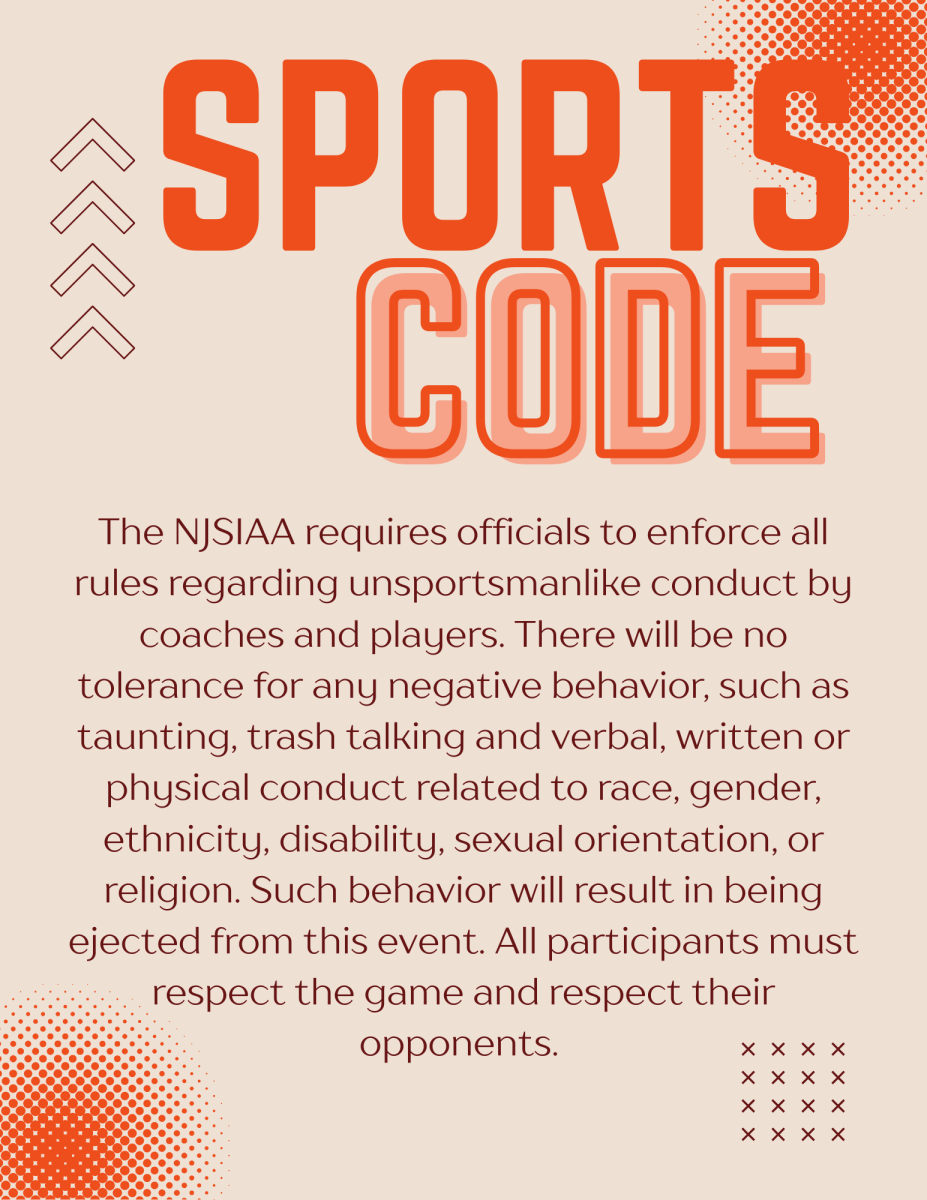
In the NJSIAA’s (New Jersey State Interscholastic Athletic Association) attempt to promote proper sportsmanship in its league, the officials are instructed to read this statement at the start of each game.
“The NJSIAA requires officials to enforce all rules regarding unsportsmanlike conduct…” and you immediately zone out. The parroting of this message has become boring, almost like a broken record that replays each game. Is this four sentence statement really all the NJSIAA can do to promote sportsmanship to its athletes, coaches, and fans? Does this statement cover all grounds of what sportsmanship should look like?
Sportsmanship is defined as “fair and generous behavior or treatment of others, especially in a sports contest.” In essence, it is easy for those involved in the game to let their emotions overcome them in the heat of competition. However, the concept of sportsmanship is a checking point which should regulate how competition impacts human communication and connection. Specifically at Cherry Hill High School East, the lines of sportsmanship have been crossed by the East countrymen and barstool accounts.
”The countrymen was designed by Justin Sisholtz probably about 20 years ago…it wasn’t designed to attack people’s parents and designed for them to attack players personally and call them names. It was designed to get fans excited and come out to games. There was one game that East played in the playoffs against Williamstown and… they took like five buses, there were more countrymen at the game, I think, than Williamstown fans total. It has now developed into these personal attacks and it has become like mob mentality. And these are kids who play other sports or kids who are really good students. These are things that they would never say from their own accounts, these are things they would never do and say individually to people,” said Boys Basketball Head Coach, Dave Allen.
Social media in athletics has become a way for sports fans to hide behind a screen and act out, typically without consequences. Whether this be through a fan account or a team’s official account, outstanding support for their home team has come at the price of degrading comments aimed at the opponent. For Coach Brooke Hullings and Coach Mike Melograna, they have found it best to run their own teams’ accounts to protect the integrity of the team reputation. Also, Coach Allen described having multiple meetings with the countrymen about what is appropriate and what will not be acceptable at boys basketball games. This past fall, the countrymen made an appearance at a boys soccer game in the final round of Group 4 playoffs against Southern High School. The game had to temporarily be stopped due to the outraging comments and lack of sportsmanship from East fans. This incident showed how far fans will go to support their team, and the negative impact that too much support can have on the players.
In addition Coach Hullings brought up how during her time running the athletic leadership council at East, there was a meeting where examples of barstool accounts from other schools were shown. Barstool accounts have a similar purpose as the countrymen, to create a sense of “hype” around a school’s sports teams, enhance school spirit, and encourage student involvement. However, in a similar way, they have become a platform to embarrass and bully athletes from other schools. In the meeting they discussed the impact of a digital footprint and how it not only hurts the targets, but can give the author a bad reputation that can come up during their college search, or eventually when looking for a job. The coaches have done their part to contain inappropriate behavior of fans, which is beginning to interfere with their job of coaching. At this point, it is vital that East steps in for action.
Coach Melograna reflected on a time of poor sportsmanship coming from an opposing team’s parent, as he was confronted and “verbally abused” in a Wawa. This occurred on a Sunday morning after a game and in front of his children. Polarity between two teams is expected, but to intrude on the personal life of a coach is extreme. East should do its best to help protect and support its players in future confrontations, such as this.
Given that schools will address all issues on school grounds, moving forward, it is crucial for the NJSIAA to do its part as well. I suggest that the NJSIAA finds a way to create common ground between competitors and give them an opportunity to see the person, before they see the athlete. For example, a yearly bonding day open to all Olympic conference athletes would be a great opportunity for them to connect beyond the field. This yearly conference could address important issues such as athlete mental health, sportsmanship expectations, and recognize outstanding athletes and teams.
A concrete statement by the NJSIAA is not enough to reinforce the ramifications that poor sportsmanship has on athletics.
Coach Brooke Hullings (Field Hockey and Girls Lacrosse), Coach Dave Allen (Boys Basketball), and Coach Mike Melograna (Boys Soccer) speak with Julia Skoufalos (Eastside Sports Editor) on the role of sportsmanship.
In high school sports, discipline has always been part of the game. Whether it is extra conditioning, reduced playing time, or even suspension, consequences are used to hold athletes accountable. But as competition increases and expectations rise, players and coaches are beginning to question where discipline ends and the punishment begins to turn excessive. Through interviews with coaches and athletes from different sports, it becomes clear that consequences are necessary, but only when they are fair, purposeful, and focused on improvement.
Field hockey coach Brooke Hullings prefers not to call them “punishments,” instead referring to them as “consequences.” She believes attendance is a major issue because missing practice or games hurts both the player and the team. Hullings stresses the importance of being present because athletes miss plays and game strategies. It becomes unfair to teammates who commit and rearrange their schedule to show up. Her approach is a balance between accountability and understanding. She makes it clear that every situation should be handled individually, especially when it comes to sickness or family emergencies. However, when absences become “a chronic issue,” she believes consequences are necessary. Even then, she is careful to consider mental health, questioning whether discipline could negatively affect an athlete or even cause them to quit.
Hullings also believes consequences can improve performance when used the right way. She argues that making players run for every mistake is not always effective. Instead, she may use playing time to send a message. Sitting a player is not meant to be harsh but to show them they are hurting the team and setting a bad example. The goal is awareness and not embarrassment because discipline works best when it is tied to growth.
Boys basketball coach Dave Allen has a similar mindset. He compares expectations on the court to those in the classroom, requiring players to be “on time, prepared, and respectful.” Most discipline happens during practice when athletes lose focus or act immaturely. Allen explains that his goal is never to embarrass anyone, but to maintain effort and respect for the game.
Allen draws a distinction between discipline and punishment, calling discipline “proactive” and punishment “reactive.” He believes expectations should be set first, and consequences should only follow if rules are broken. While he admits that sitting on the bench or running can improve behavior because players don’t want to sit on the bench, he also warns that punishment can hurt confidence. Athletes may begin to overthink their actions, afraid of making mistakes. Allen stresses that coaches must understand each player and make sure punishments support improvement rather than come from frustration.
Football coach Tyler Drob also emphasizes accountability over punishment. He explains that his team focuses on meeting standards both on and off the field, from attendance to academics. Drob believes accountability builds a strong team culture because “everyone feels like they have to hit a standard.” While punishment may be used for serious rule-breaking, most situations are handled through coaching and positive reinforcement.
Drob explains that punishments today may affect players more because they are less common than in the past. He mentioned how older coaching styles were stricter and more negative, while modern coaching focuses on building relationships. Because suspensions are rare, they carry more weight. Balancing accountability with motivation is important, and Drob believes tracking attendance and effort actually boosts confidence by showing players how committed they are.
Field hockey player Posie Radetich (‘27) provides an athlete perspective. She believes punishments have increased as competition has grown, especially transitioning from middle school to high school. While she understands discipline is sometimes necessary, she feels it crosses the line when coaches stop teaching and start reacting emotionally. She explains that practices stop being fun when punishments feel disconnected from fixing the problem, when excessive and without the intention of improvement. She notes that running can build stamina, but if everyone is already in shape, it loses its purpose. Radetich highlights the mental toll punishments can take, especially when one player is singled out.
“Knowing you are the reason your team is punished can seriously hurt confidence,” she said.
Overall, she believes that punishments are usually kept at a reasonable level, but coaches can focus too much on mistakes at times, instead of celebrating small victories, which “takes away the fun of being on an actual team.”
Football player Trevor Levin (‘27) explains that punishments can negatively affect players mentally, making them want to quit or changing their perspective on the game. He shares a story about a teammate who was benched after skipping practice and became extremely frustrated, talking about transferring schools. The moment shows how quickly discipline can emotionally impact athletes. Levin believes punishment is necessary because without it players would repeat mistakes and hurt the team.
Across all interviews, one idea stands out: discipline is necessary but it must have a purpose. Consequences should teach, not embarrass. When punishment loses its connection to improvement it begins to damage confidence, motivation, and team culture. High school sports are meant to be about growth, not just winning. Discipline itself is not the issue, but how it is used makes all the difference.