
Humans of East 2026


The editorial board that compiled the first Humans of East explains that the Dictionary of Obscure Sorrows defines sonder as “the realization that each random passerby is living a life as vivid and complex as your own — populated with their own ambitions, friends, routines, worries and inherited craziness — an epic story that continues invisibly around you like an anthill sprawling deep underground, with elaborate passageways to thousands of other lives that you’ll never know existed, in which you might appear only once, as an extra sipping coffee in the background, as a blur of traffic passing on the highway, as a lighted window at dusk.”
Humans of East is an exploration of sonder in the high school setting. Eastside randomly selected five students to interview by their school ID numbers. Each student was asked to talk about an experience they went through or a passion they have that others may not know about.
It’s so easy to get absorbed in your own life, especially in high school, that you forget that everyone else around you has a story too.
Eastside often – rightfully – covers the stories that are loud and demanding of attention. But that doesn’t mean the quiet stories aren’t interesting too. From just an arbitrary group of five kids – approximately 0.25% of the student body – came stories about horseback riding, running track, traveling the country, photography, and short video animation. As you read, think about what the other 99.75% of East is hiding.
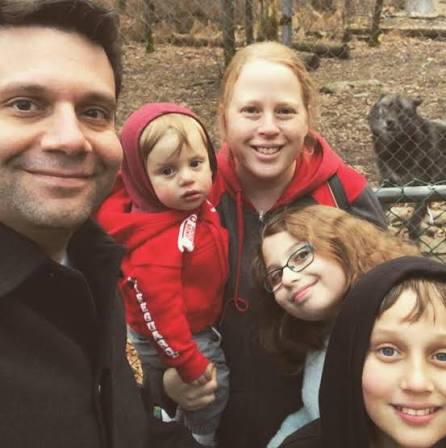
By the time Ella Ovadia (‘26) entered Cherry Hill High School East, she had already accomplished what most Americans half-jokingly put on their bucket lists: she had traveled to all 50 states.
Travel was central to Ovadia’s family life. They seldom lingered in one place, typically spending only a few hours or days in most states before pressing onward and often driving through the night to reach their next destination. Her parents would map out the general route but leave room for spontaneous diversions, setting a cadence of constant travel broken up by brief landmark stops.
“My parents were really into traveling, and they felt like we needed to be closer as a family,” Ovadia said. “They thought the best way to combat that was by putting me and my [siblings] in a car for 12 hours straight while they drove.”
Some states left stronger impressions than others. Alaska, she deemed, was cold but offered surprisingly appealing food, whereas Hawaii presented unique experiences, including visiting a teddy bear factory. Conversely, her least favorite spots included California — which may surprise many East students drawn to the kaleidoscopic allure and ostentatious epicenters of the West Coast — and Kansas.
“I get burned very easily,” she said. “Because of their tourism, it’s hard to enjoy [California] if you’re not going to Disney. For Kansas, there was literally nothing there.”
Pennsylvania, she noted, often confounded expectations. From rolling farmland to dense towns, its sheer size became unmistakably apparent once Ovadia experienced it firsthand, with hours of travel required to traverse areas that seemed small on a map.
By traveling, Ovadia gleaned a unique lens on culture and human behavior, both across the United States and abroad. She noticed subtle differences in the ways people spoke and interacted based on where she was located.
“In the South, people probably act a bit more welcoming and kinder. When you leave the U.S., people are a lot more willing to talk; it’s more of an American thing to be cold and distant,” she said. “When speaking, people down South would tell me I had an accent.”
Witnessing these disparate cultures and lifestyles has become a form of education that no classroom could emulate. The etiquette at a Southern diner or the wide-open farmland of the Midwest or the openness of strangers in distant countries have provided Ovadia with a more empathetic understanding of human behavior. This mosaic of insight informs how she approaches people, communities and even her own home state of New Jersey.
“I like shopping [in New Jersey] more than I like other places,” she said. “It’s also about the vibes of New Jersey because you can get to the beach, and it’s pretty close to the Poconos, and then you also have New York, so it’s close to everything.”
Upon years of traveling, Ovadia’s parents wrote “Family Road Tripping Without Falling: How to Survive and Thrive with Your Kids on the Road,” with Ovadia even contributing a chapter herself. She hopes to carry this love of travel and curiosity forward with her own family someday, sharing the same experiences and lessons that influenced her adolescence.
Ovadia would highly recommend that other families replicate this emphasis on traveling. She has realized that to truly understand the world — and herself — she must leave the familiar, witness its vastness and reflect on the intricacies of lives that exist just a highway away. The result, 50 states later, is a humility and curiosity that shape the way she engages with people and places, and a profound appreciation for the textures of life that might otherwise have gone unnoticed.
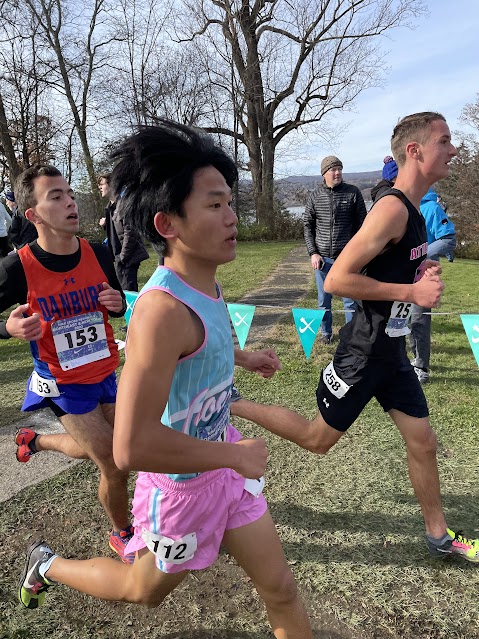
For most, running in East track and cross country is either a hobby or a competitive sport, but for Jon Chalmers (‘27), it’s a road to self-acceptance. Chalmers was adopted from an orphanage in Dongguan, China when he was just 8 years old. For most of his life, he has struggled with the burden of not knowing his biological parents, an insecurity that manifested almost daily in the form of psychogenic nonepileptic seizures.
“Seeing people with their own blood-related family made me insecure,” Chalmers said. “I created all these stories in my head to fill in the gaps, which then led me to get seizures.”
Although his seizures have become less common since his freshman year, Chalmers still struggles with accepting his insecurities. Alongside his mental battles, Chalmers initially faced immense difficulties assimilating into American society, particularly regarding the language barrier and cultural differences.
“The first time meeting my adoptive family was pretty scary because they were speaking a totally different language, and I didn’t really understand them at all,” he said. “Their culture is very different like the food and how they act to you. In China, they don’t really give you any hugs or anything, but they will cut you slices of fruit for appreciation.”
It took Chalmers at least three years to become fluent in English, and even today, he’s still learning certain grammar structures. His fluency is largely thanks to the extra English classes and out-of-school language programs that his parents signed him up for.
Starting in sixth grade, Chalmers found an outlet for his struggles and insecurities that transcended any language or cultural differences: running for track and cross country. For him, running was a way to gain a sense of accomplishment and connect with his teammates in a diverse place where he felt accepted. It’s also motivated him to run outside of school as a hobby as well. Today, that sentiment has carried over into high school, despite his general disdain for school.
“Sometimes I hate to go to school, but … I always look forward to track or cross country practice after school, so that makes the day go by a lot faster,” Chalmers said. “It made the school feel a lot smaller than it actually is, because I got to meet so many upperclassmen.”
Along with running, Chalmers has found solace in therapy sessions, which target his emotional trauma from not knowing his biological parents. His adoptive parents have also been extremely supportive of him in his journey, despite his initial disagreements with them when he was first adopted.
“I think the reason why I was lashing out on them was because I was not accepting the reality that I was being adopted and that I would most likely never go back,” Chalmers said. “They are very understanding and very patient with me, so that really helps.”
Although he has come to love his adoptive parents, Chalmers still wishes to one day return to his hometown in China to try to find his parents and uncover the reason that he was orphaned. When asked if he would have wanted anything to go differently, Chalmers said, “I don’t really think so, because without those experiences, I wouldn’t be where I am today.”
Despite his difficult childhood, Chalmers has begun to face his insecurities, using his passion for running as a support in his journey toward self-acceptance.
“I think the most important lesson that I learned was to accept that reality will play out as what you want it to be,” Chalmers said. “You’ve just got to be patient.”
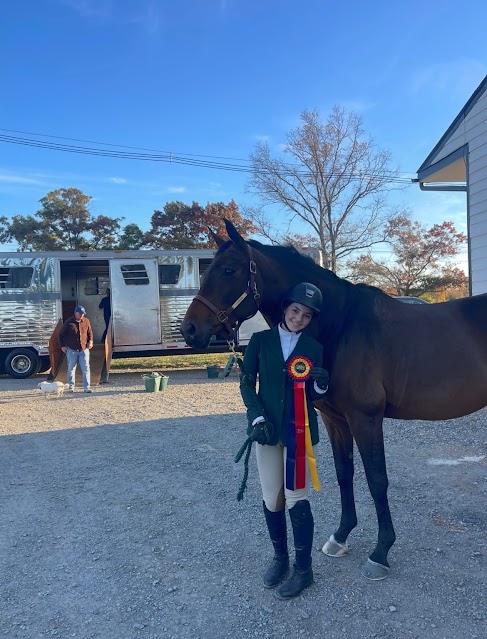
While other students head to after-school clubs and sports, Sophia Kleger (‘27) is already on her way to a barn in Southampton. Kleger is a highly competitive horseback rider, having started the sport when she was just 3 years old. Since then, she has trained hours nearly every day, earning herself numerous local and national awards at competitions across the country from Pennsylvania to Florida to Ohio.
“Basically every single day throughout the year, I’m there,” Kleger said. “On the weekdays, I come home from school, I get changed, I drive right to the barn, and I’m there until about 6 p.m.”
Although the time commitment is certainly challenging, Kleger loves practicing with her two horses, affectionately named Cappy and Lovely. Both were hand picked from Europe by trainers and brought to the U.S. for her to try out. While she enjoys spending time with them, Kleger is careful to avoid over-attachment to her horses.
“Because we have to get rid of the horses eventually, we have to try and not form so much of a pet-like relationship with them … kind of like [they’re] almost our equipment,” Kleger said. “You kind of realize that it’s either you stay at the same level with the horse that you love, or you have to sell it to be able to move up.”
Apart from her experiences with horses, Kleger has enjoyed bonding with fellow riders, both at her barn and at competitions. Some of her favorite memories were from the national competitions, where she and her friends would spend entire days at the barn, from early in the morning to late at night.
“We’re able to all be ourselves because we all have very similar interests, and obviously we all know what it’s like for each other,” she said.
Kleger’s passion for horseback riding doesn’t come without difficulties, though. Because of the intense time commitment, she’s had to sacrifice aspirations to take higher level classes and lost valuable time to do homework or study for tests. Her dedication to riding has also prevented her from participating in many after-school activities aside from some of the business clubs.
“It definitely does help that the barn is about half an hour away and my mom still drives me there, so I have a solid half hour there and half hour coming home to do all the schoolwork I need,” she said.
When she gets home from riding, Kleger keeps a strict schedule, only taking a break to shower before immediately focusing on her homework and studying. To her, maintaining that time management along with the precarious balance between her academics, sports, and personal life is of the utmost importance.
Although she doesn’t plan to continue riding competitively in college, Kleger will look forward to her visits home, where her horses will always be waiting for her. Until then, she can still be found practicing daily at her barn in Southampton or studying at every opportunity she gets.
“It’s been such a big part of my life that I can’t really imagine my life without it,” Kleger said.
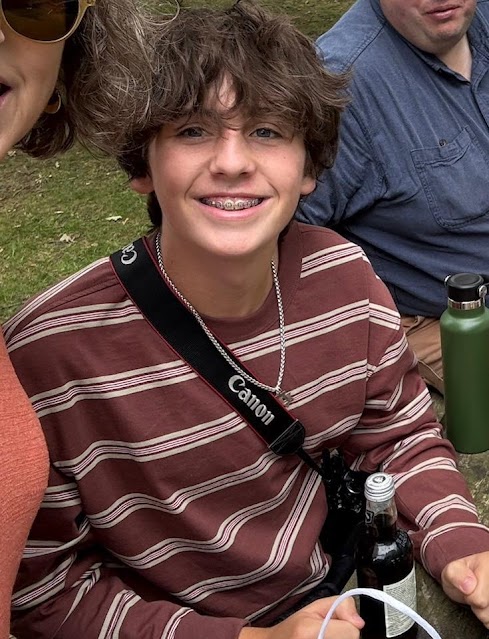
“A picture paints a thousand words,” said Jack Towbin (‘28): a cliche, but for this photographer, it crosses generations.
Since before Towbin was born, his grandfather had been a photographer. From landscape to action shots, he covered it all. A few years ago, Towbin was gifted a camera by his mother, and ever since, his passion grew.
“It’s a very good way to capture
memories for me,” said Towbin. “Some photos are [of] a place that I love, pictures of my camp, vacation places I’ve gone to, and some places I just really like.”
He explained that photography comes from his emotion; that the scene speaks for itself. Whether happy or sad, he can truly emphasize his feelings through the lens.
Beyond Towbin himself, however, photography is about a past generation: his grandfather. Generations may be separated by distance or by age, but his camera has given him a way to meet his grandfather in the middle.
“I feel like it’s almost like carrying on lineage,” Towbin said. “My grandpa’s really into [photography] and he really loves it.”
While Towbin admits there are many things he can’t fully relate to whether it be growing up in different times or different views on the world, photography goes beyond those differences. His grandfather lives far away in South Carolina. On a day-to-day basis, their lives rarely overlap. Still, from composition to the story behind the photo, photography makes the distance grows smaller.
“I can’t relate to a lot of stuff with my grandpa because obviously he’s much older than me and has a completely different life,” Towbin said. “But it’s nice to have that connection with photography.”
What began as just a casual interest for Towbin eventually grew into a connection to it. He doesn’t take photos for recognition or for a reward, but rather just because he loves it. Not only that, but finding the care to strengthen his relationship with his grandfather through it.
“We talk a lot now,” Towbin said. “Before I was in photography, we were close, but I think we got much closer ever since photography, just because we can discuss all the love for the game.”
What started just as taking pictures from a gift he was given turned into something larger for Towbin. Photography became a way to stay connected to his grandfather despite the distance. Every photo he takes is another gap closing between the two, tying them together through a shared love of the craft.
“I feel like I’ll make him proud,” said Towbin.

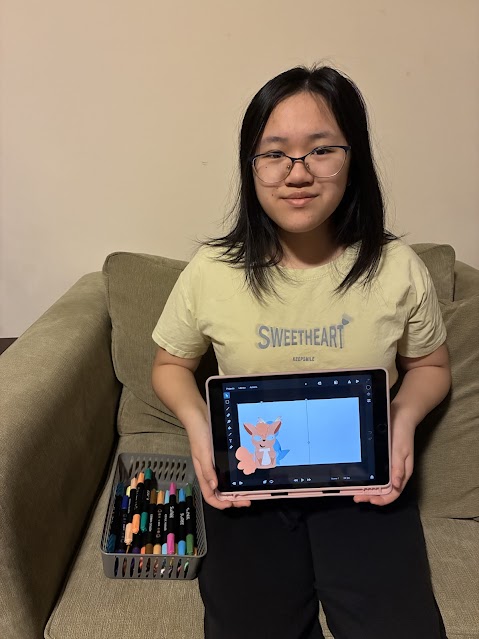
For Jessica Le (‘29), animation is one of the most important aspects of her life. She’s made friends at East through shared love for anime, taken digital art classes, and taught herself to make her own animated videos.
Her first experience with anything animation-related came from watching a television show when she was 7 years old. While Le doesn’t remember the name of the show, she vividly recalls the indie animation style and storytelling that introduced her to her greatest passion today.
Until this year, Le has animated primarily on an iPad, using widely available apps like Ibis Paint and CapCut. Now that she’s in high school taking the elective Graphic Design 1, she has more options for creation tools.
“[Graphic Design] has helped me get a few different art programs and also learn to use drawing tablets for the computer,” Le said.
Her electives and the art-related extracurriculars she hopes to get involved in in the future are all helping her hone her digital art skills. However, she plans to use those skills as a supplement to her true hobby of short video design.
There are two methods that digital videographers use, one being frame by frame and the other called tweening.
Frame by frame, also referred to as pose by pose or traditional animation, is hand drawn. Typically frame by frame animators draw between 12 and 24 frames per second. This means a 30 second animation could have up to 720 unique images.
Tweening is short for inbetweening. Animators who use this style create intermediate frames between the key frames of an animation. The key frames are the starting and ending frames of a character’s motion.
Despite the more convenient nature and popularity of tweening, Le prefers to craft her animations in frame by frame style. She likes the traditional look and enjoys the time spent hand drawing her designs.
“The tweening can be very hard, especially when you don’t know how to use key frames,” Le added.
Most of Le’s animations are inspired by trends she sees on social media or the television shows that she watches.
Some of her favorite animated shows are “Battle for Dream Island,” “Pokemon Sun and Moon,” and “Rise of the Teenage Mutant Ninja Turtles.”
“The show’s humor is where I get a lot of my stuff from,” Le said. “And also the art style. The animation type for all of them is almost bouncy in a way.”
She pays careful attention to even the smallest details when drawing. Le makes a storyboard before diving into any animation. She describes it as hard work that takes a lot of processing time and preparation.
“I like putting the plan into action. I think about what I want to do, and I get to see it come to life, almost,” Le explained.
One of the most important parts of animation is character creation. Le invents personalities and specific physical features to match.
Villain characters typically have cooler color pallets to easily contrast the warm tones of heroes. Every character has a specific and intentional way of moving as well.
Le credits Youtube channels like Jaiden Animations and Let Me Explain Studios for teaching her what she knows about characterization in art.
She also draws inspiration from the artist friends she’s met at East.
“I saw their sketchbook and they saw mine. They came up to me and we just started talking,” Le said.