
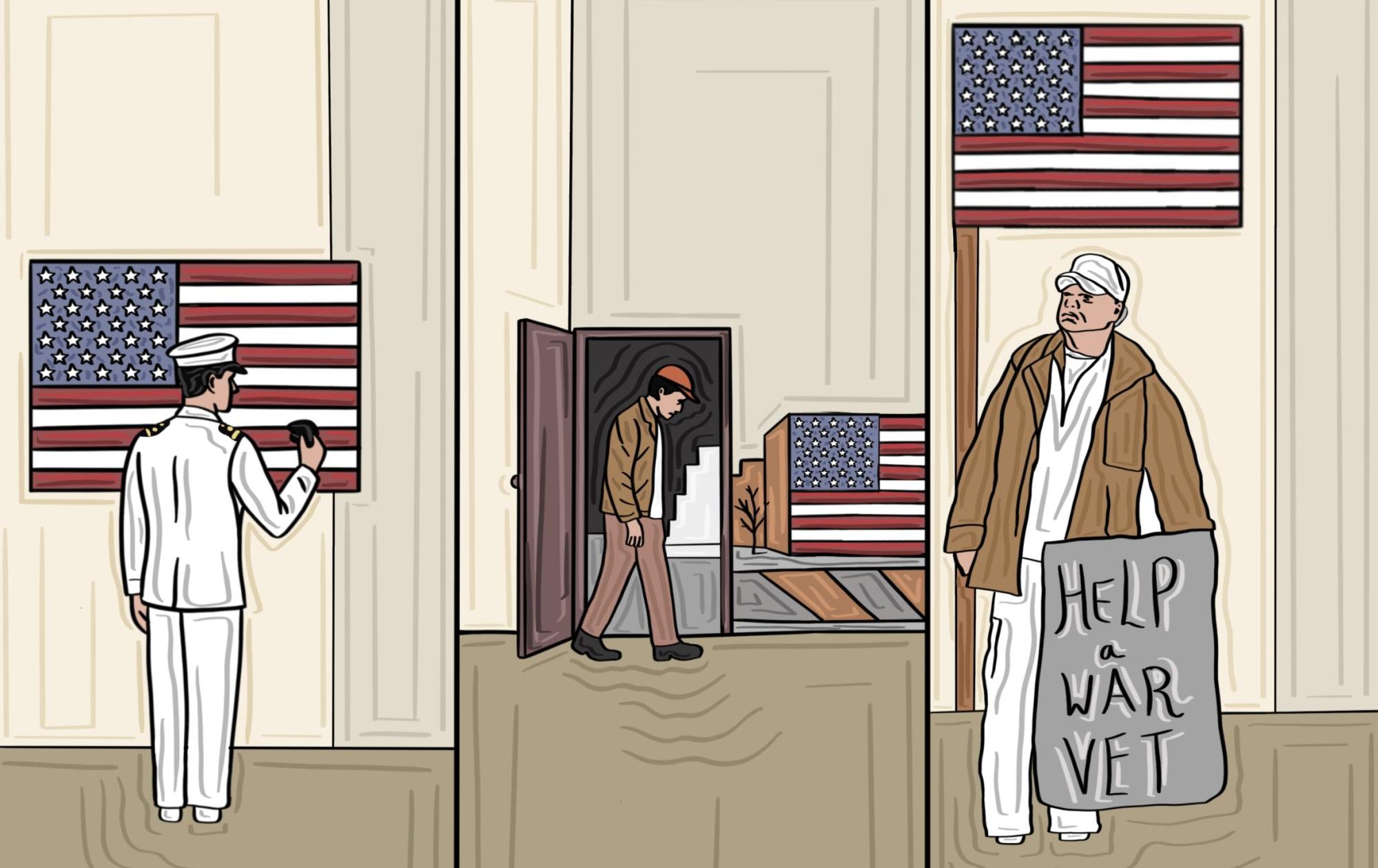
From service to struggle: Veterans face a lack of support


Every year on Nov. 11, America honors those who served in the military — but for many veterans, this gratitude ends when the ceremonies do. Behind this national day of recognition lies a system that struggles to serve those who once served it. Despite many reforms in recent years, the Department of Veterans Affairs continues to face the same criticism; our nation’s heroes are being left unsupported.
In 1931, the Veterans Administration was established to provide services for the growing number of veterans from World War I and earlier conflicts. In 1989, the independent agency was elevated to a cabinet-level department and is now known as the U.S. Department of Veterans Affairs. Today, the VA provides healthcare, benefits, and cemetery services to military veterans and their families.
But many factors, like underfunding and staffing issues, have limited its ability to reach veterans. After major conflicts with other countries, like Afghanistan, Vietnam, and Iraq, the department has been completely overwhelmed by the number of soldiers seeking benefits. Millions of veterans rely on its services, yet many remain underserved.
In an interview with Eastside, U.S. Air Force veteran Mr. Timothy Locke, an AP World History teacher at East, who served six years of active duty and four years in the reserves, described the VA’s persistent struggles.
“The VA administration has been very weak, and any service member would tell you that,” Locke said. “VA hospitals in this country have sometimes been deplorable — a national shame.”
An infamous scandal in 2014 exemplified how significant these problems were. It was revealed that some Veterans Health Administration (VHA) hospitals were changing appointment data to hide long wait times for veterans seeking care. It was reported that at least 40 U.S. Armed Forces veterans died while waiting for care at the Phoenix, Arizona, Veterans Health Administration facilities.
The scandal sparked backlash and calls for reform from many, leading to the VA Choice Act, which allows eligible veterans to receive care from non-VA facilities. Even so, this act fell short of effective implementation. In 2018, Congress passed the MISSION Act (VA Maintaining Internal Systems and Strengthening Integrated Outside Networks), which expanded veterans’ access to community care, caregiver support, and telehealth. However, many still believe the government still isn’t doing enough.
“I feel they should strengthen the VA and the authorization itself,” he said. “The government’s got to say, ‘we have to put this money aside,’ because these are the men that were willing to give true devotion to this country.”
Despite the flaws, Locke acknowledges that support has improved compared to the past.
“Today, you see much more mental health assistance [and] job assistance. … Those supports are absolutely necessary. I think they should go even further.”
Honoring our nation’s veterans means more than celebrating them once a year. As Locke said, “These are the men and women willing to give their true devotion to this country. They deserve the best of what we can give them.”
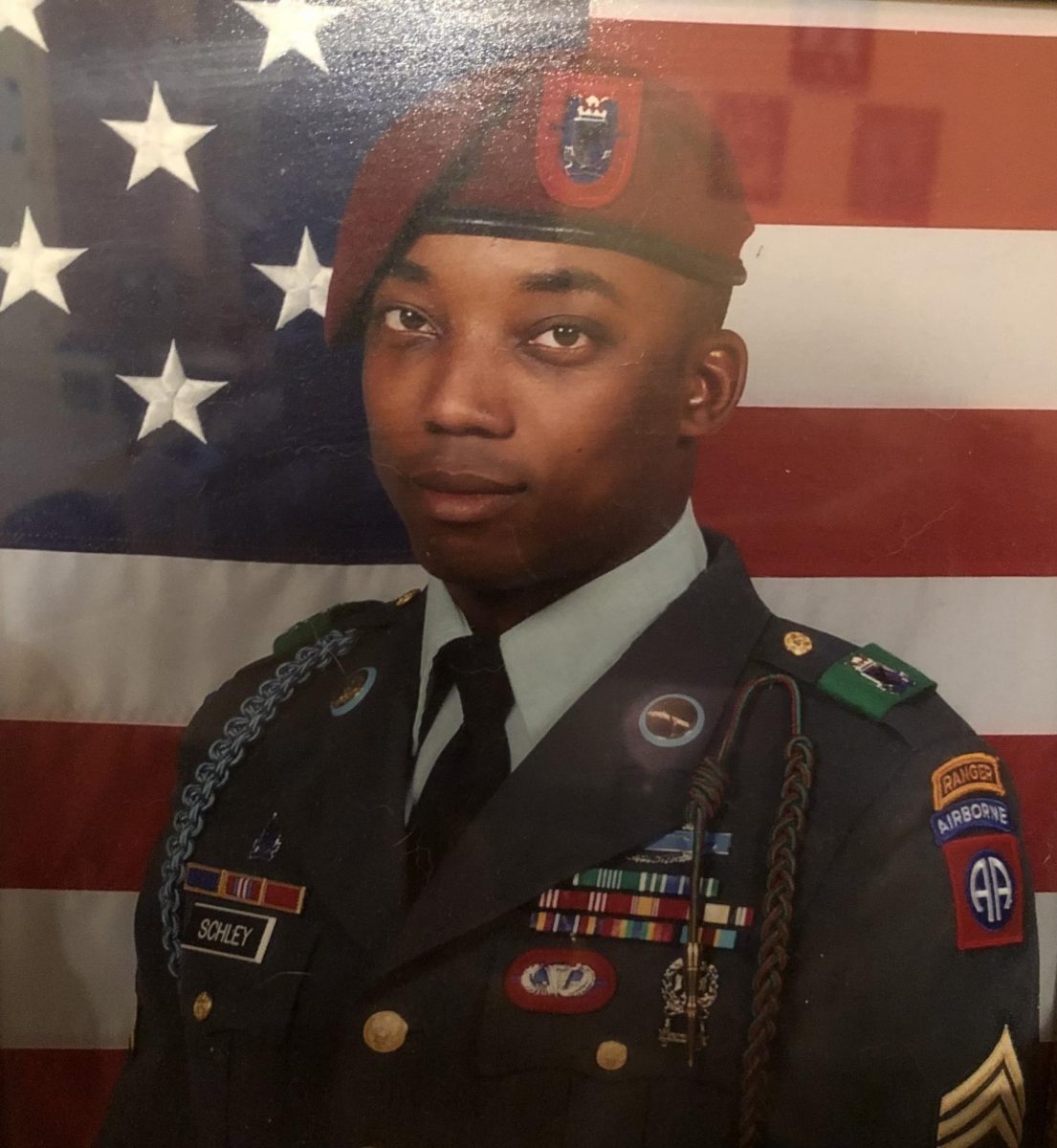
Although the struggles of veterans in America are slowly becoming more acknowledged in mainstream society, there are still numerous other ways that veterans need to be supported. One of the best ways to support veterans is to listen to their stories, not simply to appreciate their sacrifice, but also to allow them to release years, or even decades of pent-up trauma in a cathartic way. Eastside interviewed Iraq War veteran Sheron Antwann Schley, 40, to hear his experiences and provide just one example of the stories that veterans like Schley have to share. Here is his story.
Schley grew up in Jackson, New Jersey, initially studying law at Seton Hall University before joining the United States Army in 2005. In the years of intensive training that followed, Schley obtained the title of Airborne Ranger and became a sniper by 2008.
On his first excursion, the truck in front of him exploded outside the base’s gate, and the reality of war set in. Over the following years, he deployed twice to Iraq, received an Army Commendation medal, nearly died when his truck exploded, and struggled with survivor’s guilt as he lost the men he had forged brotherly bonds with. During the interview, Schley described some of the experiences that stuck with him the most, including the death of a close friend, Chris Mason, who was killed during an ambush at a marketplace in Bayji, Iraq.
“Their truck is hit by an anti-tank mine and it flips the truck,” Schley said. “Mason gets trapped inside and I just had to listen to him scream as he burned in the truck. That one stuck with me for a bit. It still does.”
Schley also described the death of his “base workout buddy,” Eric Palmer, a soldier from another company, who died during a mission off-base.
“I figured he was going to go out, come back, and then we’d lift like we always do,” Schley said. “Then, they come back and tell me that Palmer got killed by a sniper while he was pulling security.”
After exiting the military in 2012, Veterans Affairs declared Schley unemployable due to numerous traumatic brain injuries that had been caused by explosive blasts.
“I think my biggest gripe was that they told me I couldn’t work, but then they also weren’t giving me any money,” Schley said. “I had to wait for two years and then I got a back paycheck. A lot of veterans spiral during that waiting time because they have nothing else.”
Additionally, Schley criticized the minimal assistance that he received upon returning home from his deployments. He described the struggles that he faced trying to navigate VA benefits, set up new providers, and prepare himself for a life outside of the military. The lack of guidance compounded by the military “taboo” on using VA benefits meant that Schley didn’t even end up using any VA benefits after the end of his service. As a result, Schley began to turn to other forms of recuperation.
“When I first got back, within a month or two, I had bought a motorcycle and I was learning how to stunt, practicing wheelies and doing risky maneuvers because it was the closest thing to make [me] feel that adrenaline that [I] felt at war,” Schley said. “There were times when the PTSD kicked in and I got to a point where I just didn’t care if I was going to live or die.”
Even when he eventually did seek help from therapists and psychiatrists, Schley never felt that his interactions with them were genuine. Ultimately, they only pushed him further away from better forms of self-care and recovery.
“I was told by one of my first therapists, ‘I’ve never dealt with a veteran who’s been through the stuff that you’ve been through.’ Unknowingly, he kind of turned me off from even wanting to go back there,” Schley said. “Obviously, they have to do their intake questions and certain things, but a lot of that gets really tedious. It isn’t fellowship or community anymore, it just feels really transactional.”
While Schley was ultimately able to recover through involvement in his church and the need to pull himself together for his children as a single father, he lamented the fact that his struggles were mostly in solitude. Looking back at his own experiences in therapy sessions, Schley described the type of support that he believed would have helped him most at his lowest.
“Sometimes, [veterans] just want to come, maybe say a couple words, and sit in silence, because the noise just stops. I know it sounds weird because you could do that at your own house, but sometimes, when you’re just by yourself, everything’s loud,” Schley said. “There’s so many different things and voices vying for your attention. Sometimes, it’s just good to sit and be still and let [veterans] open up as they need.”
Although Schley was able to eventually regain a sense of normalcy, the physical and psychological scars that remain still leave an impact on his everyday life. Regardless of the many ways that we attempt to acknowledge veterans, the only true way to support them is to connect with them, hear their stories, empathize with their struggles, and assist them in the ways that they personally require. As a society, we must endeavor to never forget the sacrifices made by our veterans and strive — not just for acknowledgment — but for authenticity and empathy in our support for veterans.
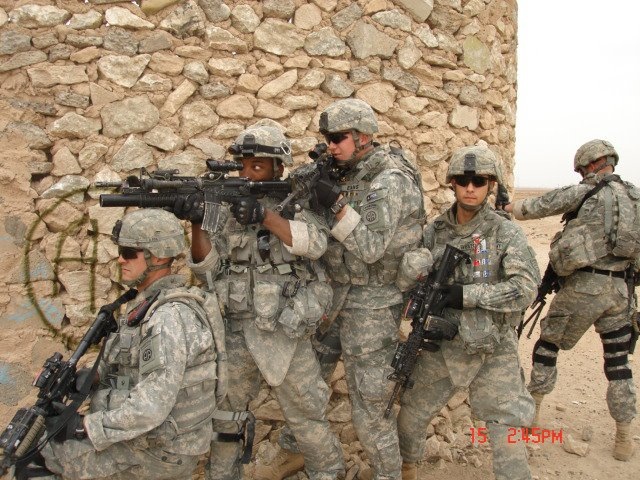
Between mental and physical illness, coming home from war is a difficult task for veterans. They have to be reintegrated into society after being removed from their families and the life they once knew for months or even years. These service men and women have seen destruction, gruesome injuries, and many casualties. Without experiencing war firsthand, it is difficult to relay to others the toll it takes on one’s life after witnessing such horrible and intense conditions. Rebuilding a new life can be difficult and traumatic for veterans, resulting in an increase in mental and physical distress.
As previously stated, many veterans are deeply traumatized after their return from war. Not only do the horrors of death and mutilation remain in their minds, but loud noises, certain scents, and other sensory details can trigger traumatic responses from them. These scents and noises can take them right back to their experiences during the war, which may ultimately result in a negative mental health diagnosis. One large study from the National Library of Medicine found that approximately 14% to 16% of the United States service members deployed to Afghanistan and Iraq have been affected by post traumatic stress disorder (PTSD) or depression. Living with the struggle of having a constant reminder of an insanely traumatic experience can be very difficult to cope and live day after day with.
These men and women need government assistance in order to receive the help they so desperately need and deserve. Unfortunately, the U.S. Department of Veterans Affairs does not always provide adequate assistance to veterans returning from war. In an interview with Eastside, U.S. Air Force veteran and AP World History teacher Mr. Timothy Locke said, “I saw a lot of my older friends and neighbors that had gone to Vietnam receive a lot [worse] treatment [from the VA] so I was lucky.”
Veterans face challenges with accessing healthcare and paying for services, especially if they are low income and not receiving assistance from the VA. According to Veteran Affairs, approximately 50% (9.2 out of 18.3 million) of all veterans used at least one VA benefit or service, this leaves the other 50% without the valuable help they deserve and may desperately need. The VA needs to reach out to veterans to assist them with their finances and coping process.
The VA needs to step up to assist our veterans. They fought in the war to protect the citizens of America. It is our responsibility to take care of these veterans because they put their lives on the line to ensure our protection. The VA needs to do their part now by ensuring that not just some, but all veterans receive the mental help they deserve.
Veterans have sacrificed so much in their lifetimes to serve the country, so providing support to veterans post-service should undoubtedly be a necessity. While the government is highly responsible for providing this support, communities and everyday citizens also have the power and potential to make an impact as well.
Government programs can be expanded and improved for physical, mental, and economic solutions to veteran needs. This would include an increased budget for the U.S. Department of Veterans Affairs (VA) to implement specialized treatment plans with minimized waiting time or denials for medical care. Veterans with post traumatic stress disorder (PTSD) and traumatic brain injuries sustained in battle require immediate attention, and this increase in budget could allow for better assistance and support in these areas. With veteran homelessness as an issue, housing assistance programs like the U.S. Department of Housing and Urban Development and the U.S. Department of Veterans Affairs (HUD-VASH) program are in place to get veterans back on their feet with shelters. Additionally, job placement services and training for veterans can provide many more options instead of forcing veterans to return to local shops or businesses where military skills may not be compatible. Even the way in which veterans learn about their resources could be implemented better with workshops and support groups to help them transition into their new stage of life.
The community, localized and on a larger scale, can create a grassroots effect with their involvement. Veteran resource centers can be set up in neighborhoods or within schools and public buildings to help with employment, healthcare navigation, socialization, connection, and coping. Schools and libraries can host veteran guest speaker events to offer a sense of community to veterans and propagate a stronger level of understanding between veterans and non-veterans. More businesses can collaborate with veteran services to offer discounts on products and services, mentorship, or job placements. Places of worship and charitable organizations can organize volunteer efforts to repair homes or offer transportation service options for the elderly or disabled veterans.
Support should also be provided on a more personal level in the form of acknowledgement and awareness. The more people know about what veterans have been through, the easier it becomes to create resources and policies that help them. From writing letters to congressmen to contacting veteran charities, acknowledging veterans — whether that be their contributions and struggles — goes a long way. Taking part in volunteer appreciation efforts and veteran social groups shows veterans that they are appreciated and welcomed home again. Even just attending Veterans Day services at public locations shows veterans their sacrifice in service was worthwhile, or at the very least, appreciated.
In conclusion, there are many more diverse ways to support veterans than most people realize. Government assistance provides structure, and communities provide connection. When these forms of support are combined, veterans get all they need in valuable resources, but also a sense of appreciation. Providing support in these ways is the least that can be done to ensure a proper quality of life for those who sacrifice everything for our country.