Deported and disrupted: the price of ICE in New Jersey


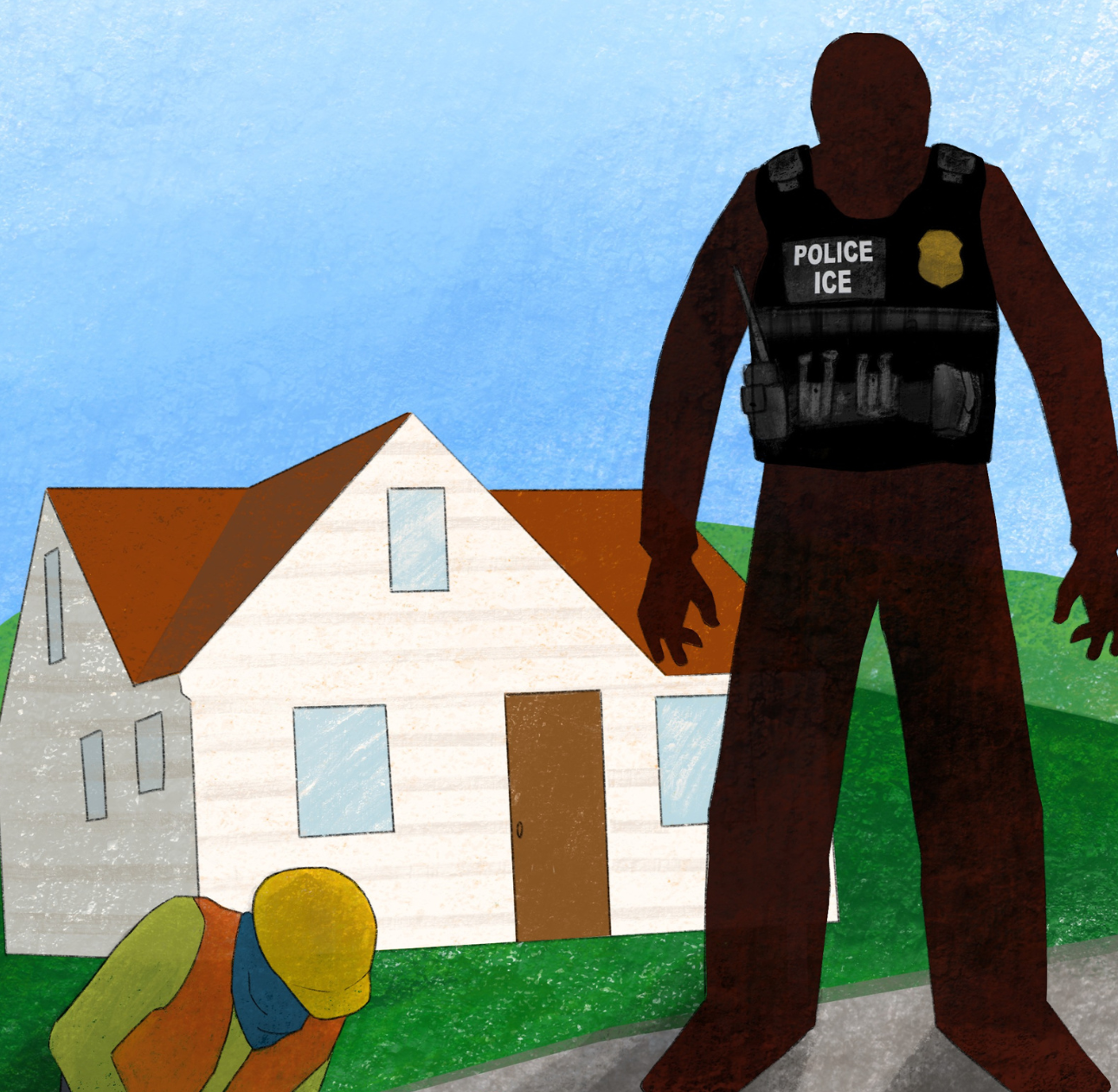
The white vans that transport immigrant construction workers to job sites used to represent an immigrant’s opportunity to work and make a living — to achieve the American dream. Now, they have become a symbol of fear and oppression.
“It’s hard to find people who work in construction because [ICE] knows to follow the trucks,” said Marco, a construction business owner. “Everyone is afraid to work in construction because they know that if they get in the van, they can get stopped anywhere. They don’t want to be caught.”
This fear has changed every aspect of business. Workers — both documented and undocumented — are staying home. Projects remain unfinished and business owners worry about how much longer they can keep going without their workers.
“They don’t know if they [will] come out in the morning and be stopped … but they need to work, so they have to go,” said Marco.
This fear extends further than just employees but for the business in its entirety. For Marco, this fear may push him to make a decision he never wished for.
“I don’t know what’s going on with my business. Who knows? If I don’t have guys for work, I’m going to lose my business, ” he said. “I’m going to have to go back [home] pretty soon because I’m not going to have support for my family here.”
The effects on businesses can then impact surrounding communities. In areas with large immigrant populations, some small businesses report losing more than half their customers during immigration crackdowns, according to the United Nations. When people stay home out of fear, the economy faces a ripple effect.
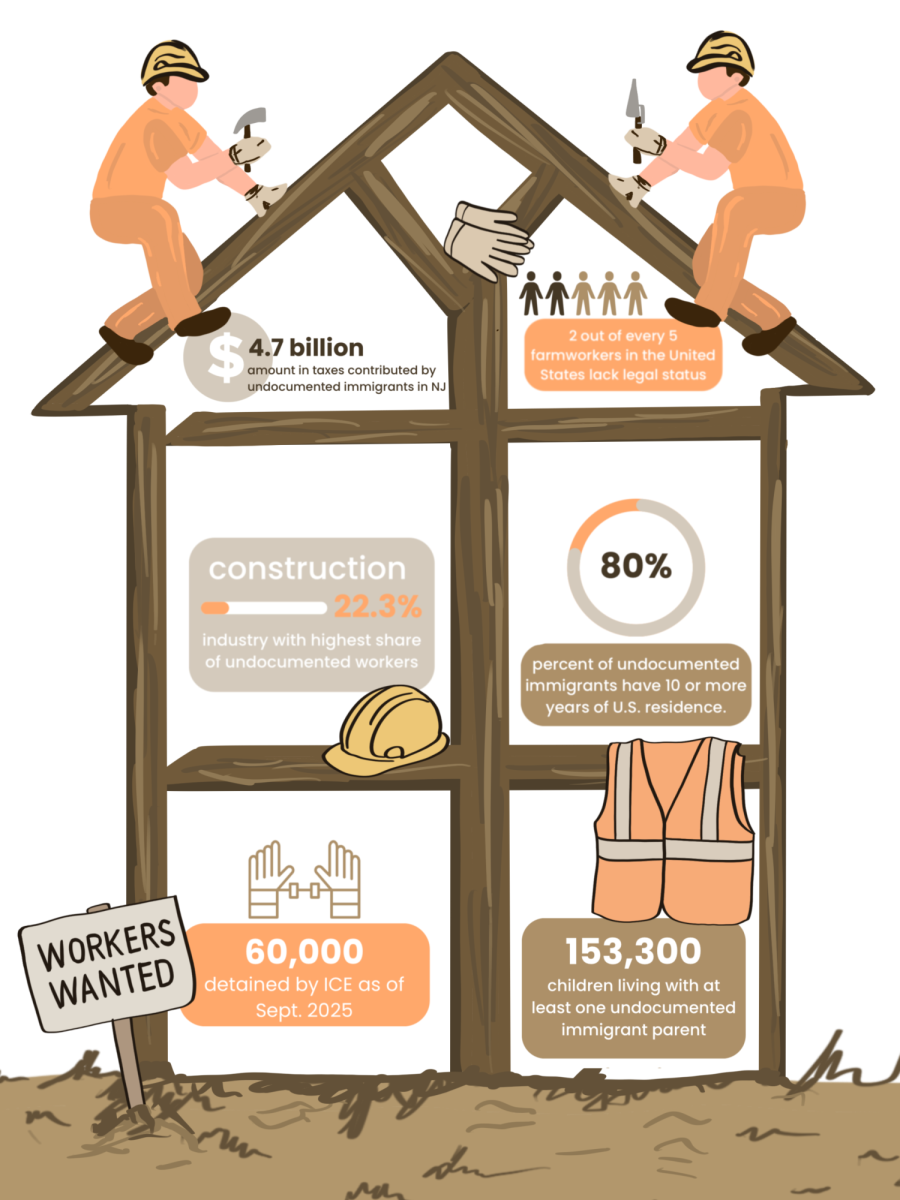
“The immigrant community is about 40-45% of the low-income crowd and we, believe it or not, contribute to the economy,” said Luis, an undocumented immigrant and business owner. “Even though it seems crazy and not fair, for the last seven years [I] have been here and have always paid [my] taxes, [I have] opened [my] own company and paid for those company taxes. [I] am part of this community and society.”
When ICE raids are driven by monthly quotas, the technicalities and ethics remain secondary. The crackdown on immigration has promoted dehumanizing practices that come at the costs of families and livelihoods. Ernesto, another construction business owner, told the story of a close friend who was detained two months ago.
“They put him in jail for six days,” said Ernesto. “They told him they would send him to Texas and then deport him. He has been here for 22 years. … His family is here and [he] has two kids in college. Now, his wife is here with the two kids trying to move on with the business and he is in Brazil.”
“My heart breaks for them,” Marco said in regard to his workers, his voice quivering. “I know they came from a bad life and came to support their family. … Everybody came here to get a better life. That’s the American dream.”
If all of these workers are deported by ICE or are too scared to work, who will fill these labor-heavy jobs?
“They need to come up with something, because we need people here,” Marco said. “If you go to a fancy restaurant and go behind the kitchen, they have twenty immigrants cooking… If they say no to everybody who’s going to work, we [will] have a lot of work to do in construction, in landscape, and [in] restaurants.”
The situation seems impossible to provide for all. The economy needs these workers and business depends on them. However, the workers live in constant fear of being picked up and deported, separated from their families who have built their lives here.
Marco shares his hope with everyone: “I hope this stops. I don’t want this government because now everybody’s in a bad position.”
As the administration continues its relentless pursuit in immigration enforcement, employment rates in these large sectors remain a concerning area. ICE’s quotas may be met, but at the cost of the livelihoods of business owners and those supported by them.
Seventeen years old and armed with nothing but a handful of cash, Miguel arrived in the United States in 2001, where the promise of opportunity was as luminous as it was veiled. On his tongue were the few words he had managed to scrape together: “Hi,” “Bye,” and the ability to count from one to seven. Behind him lay a life etched in the rural landscapes of South America, a family surviving on $500 a month and the inevitability of working on a farm. Before him lay a country of promise, vast and uncertain, its challenges as relentless as its possibilities. He wanted an education. He wanted a future. He wanted to exist beyond the limits fate had drawn for him.
“I had two options,” Miguel said. “One was to stay on the farm and become a farmer, just like everybody else, and live here forever until I die, or I could figure something else out. Well, guess what? I figured something else out, and here I am.”
Driven by the hope of creating a new life for himself, Miguel entered the U.S. wanting more than his family’s modest income. In his home country, he said, a middle-class family may earn only $400 or $500 a month. Conversely, work in the U.S. paid around $15 an hour, which could amount to roughly $2,600 a month. Recognizing that college was not financially attainable, Miguel saw that working in the U.S. offered a different way to secure stability and opportunity for himself and his family.
“I wanted to become a dentist, but I couldn’t do it because it’s so expensive,” Miguel said.
With college and a professional career out of reach due to his family’s financial situation, Miguel realized that building a better life in the U.S. required mastering English and embracing the cultural differences of his new country.
“Either you learn English, or you are going to get stuck,” he said. “One day, I just came to realize that I have to learn how to speak in order to fit in. Once I started speaking English, all of the doors opened up.”
Upon establishing a stable life, Miguel focused on maintaining connections with his family and community back home. During the early 2000s, his hometown had virtually no reliable phone service, making communication nearly impossible. Recognizing this barrier, Miguel invested a significant portion of his earnings to help fund a cell tower on a nearby mountain and establish a signal, allowing not just his family, but his entire community to make regular phone calls.
Miguel’s experience reconnecting with his roots inspired him to engage with the community in the U.S. as well. Beyond legal status or paperwork, he feels like he is part of the system simply through his involvement in the community he has become part of.
“I donate countless hours to the community,” Miguel said. “People know who I am. People know where I come from. This is home.”
Despite his involvement, in his new community, Miguel worries constantly about the dangers and uncertainties faced by undocumented immigrants, particularly the effect on their families.
“I am scared for myself,” he said. “I am scared for everybody else, as well. But the biggest scare … is for my surroundings — my family. I have three kids. I have one in college. If I go, who’s going to pay for her college?”
From his perspective as an immigrant, Miguel hopes people recognize that being undocumented does not make him a criminal. He wants others to see that immigrants come to the U.S. to work hard, provide for their families and contribute to their communities.
“Understand that we’re not the bad guys,” he said. “Before you point the finger and judge, do your homework first. Try to find out who that person is.”
Arriving in the U.S. at 17 with only a handful of cash in his pocket and a lifetime of dreams, Miguel crossed the border not knowing what awaited him. Now, after years of work and learning to navigate a new life, he has become part of the community. He hopes others can have the opportunity to build stability and belong without facing the constant threat of deportation — and that people see immigrants as human beings striving for the same security as anyone else.
For some, stories of mistreatment and inhumane conditions in ICE facilities are simply rumors — but for Alejandro, those rumors were a reality. In 2004, Alejandro left his home country in Central America and attempted to cross the border through a mountain range, but was caught by ICE officials, who took his fingerprints and imprisoned him in jail for nine days.
Alejandro described the miserable conditions in his cell during those nine days, where he and several other immigrants shivered in extremely cold temperatures and clothes that were soaking wet due to heavy rainfall during their trek.
“We asked for blankets and covers, but they only gave us aluminum paper,” he said. “Everybody covered [themselves] with the aluminum, but we were still cold.”
On the tenth day, the ICE officials chained him and the other men at their wrists and ankles before sending them on a bus to the airport to be deported back to their home countries. However, on the bus ride, Alejandro fell into a fit of epilepsy and convulsions because he hadn’t been able to take his medicine for the nine days he was in jail.
“I closed my eyes [and] I didn’t know what happened,” Alejandro said. “When I opened my eyes, I was standing in a hospital in Texas.”
After he recovered, the border patrol put him back in jail, but then mistakenly sent him to Mexico instead of his home country, leaving him stranded with no way home. By contacting a friend from over the border, he was able to organize a “taxi” that picked him up from Mexico, transported him by boat over a river back into Texas, and then to Nevada.
“I needed to stay over here so I [could] make a little more money for my family back [home],” Alejandro said.
While Alejandro was able to make it across the border and find work in the United States, the rest of his family still resides in his home country, where most people have exceedingly low incomes, only surviving off of small, family-run businesses.
Alejandro’s family owns a store operating out of their house, where they make corn grain and tortillas and also sell books and pens for local schoolchildren. However, while Alejandro still lived there, some criminals from El Salvador threatened him, saying he had to regularly pay them $300 or they would harm his family or someone else close to him. He spoke with the police, who claimed they would look for the criminals, but didn’t actually put any effort into a search and were likely already paid off.
Furthermore, Alejandro criticized the high vehicle insurance rates in his country compounded with the lack of actual coverage for accidents.
“I had an accident where somebody hit my truck, but nobody paid,” he said. “The insurance is not covered. You pay so much, but it’s not covered.”
Alejandro’s story is one of millions that represent the hardships faced by undocumented immigrants, both before and after crossing the border into the United States. The mistreatment he faced in ICE facilities is unjustifiable and highlights the need for tighter regulation of conditions in these facilities. Alejandro shares his story in the hopes that it will humanize the illegal immigrant community through their struggles and lead to meaningful change through those who are willing to listen.
Carlos came into the United States at 25 hoping for a better life with more stability and economic opportunity. While he is currently a business owner and has been able to build a temporary life, he is haunted by the constant reminder that as an illegal immigrant, he is prevented from forming true permanence.
During his time in the United States, Carlos has become extremely grateful for lifetime insurance, good schools for his kids and more accessible transportation. Seven years ago, he and his wife left their home in South America after they realized that they didn’t see any further opportunities to progress.
“[I] didn’t see a brighter future, other than the same culture repeating itself over and over again,” he said.
Carlos struggled at first in the U.S. due to the communication barriers presented by his lack of English fluency, but he now feels that he and his family have learned to co-exist in the United States. While he is more comfortable than he was upon first arriving, Carlos still lives with the fear of being deported every single day.
“I am very scared to be deported because of my kids, not because of my own soul,” Carlos said. “Because my kids and my wife have learned to be here and have a good life here, they don’t know anything else.”
Being undocumented, he struggles most with the reality that he can’t make long, concrete plans, never knowing how promising his future will be. While he has been able to involve himself in the community and establish himself economically as a business owner, he laments the fact that he can’t pursue any long-term aspirations.
Carlos’s fears have been heightened as a result of a close friend’s encounter with ICE. Weeks ago, his friend had a scheduled court appeal regarding his work visa in which he received a year extension to come back to court and see the judge again in the fall of 2026. Relieved that he was given a year extension, he stepped out of court with papers in his hand and was immediately detained by ICE officers waiting for him outside of the court. His friend was incarcerated and still is today.
Carlos, an illegal immigrant himself, understands that there are criminals who are immigrants that should be dealt with in order to strive for a better system in the U.S. However, he feels it’s unfair that enforcement has also been geared against illegals genuinely involved in the community and contributing to the American economy. Carlos believes that people need to have a more comprehensive understanding of the immigrant community.
“Us immigrants, we are part of the engine of the country,” he said. He believes that the immigrant community, especially a good amount of the lower income crowd, contribute to the economy and help push it forward.
Despite the fact that he isn’t here legally, he has opened a company, paid all his personal and company taxes and forged his own path in the community for the last seven years.
Carlos does not deny the frightening reality of his life, but he holds firm to the belief that undocumented business owners like himself help move the system forward, creating jobs for people no matter their skin color or immigration status.
New Jersey, a state far away from any international borders and the fourth smallest by size, may not seem like an area that would be rife with activity from ICE. However, the Garden State has seen some of the highest amounts of ICE raids and detainments since the agency has ramped up its operations in the last few months.
In February, a deal was struck between ICE and GEO Group Inc. for a private, 1000-bed detention facility called Delaney Hall in Newark. This came in addition to an already large, private immigrant jail in nearby Elizabeth. Valued at a record-breaking $1 billion, the contract immediately sparked protests from New Jersey residents.
Notable activists and politicians pointed out the shaky history of GEO Group and argued Delaney Hall would not provide basic living standards for detainees. Sen. Cory Booker (D-NJ) condemned it as an “insult to immigrant communities,” and Newark Mayor Ras Baraka promised to “padlock” the facility until it could be thoroughly investigated. Baraka was later arrested by ICE officials in May just outside of the premises on trespassing charges, although he was released shortly after with all charges dropped.
The quick and unpredictable nature of recent ICE raids makes it impossible for anyone to predict where they might occur or consider themselves completely safe. On Aug. 20, 29 employees at a packaging warehouse in Edison were detained without warning and sent to the Elizabeth facility. This came after a similar raid at a wine warehouse just a month before in the same town, and further incidents followed in Princeton and Trenton.
In some areas, activity has been limited by a lack of cooperation between ICE and local governments. The Department of Justice (DOJ) designated a list of these “sanctuary cities,” which includes Newark, Jersey City, Paterson and Hoboken. Leaders in each of these cities defended their positions, with Hoboken Mayor Ravi Bhalla saying he would not compromise on his “morals and values.” Consequently, ICE has threatened to act with more force in these particularly resistant areas.
Currently, New Jersey stands as a uniquely vulnerable hotspot for ICE operations. With an immigrant population of nearly 25% — the second highest percentage in the country — millions of residents are concerned about the safety of themselves and their loved ones. For now, everyone must take all precautions and prepare for the worst, given there is no guarantee that ICE activity will not escalate in the near future.